
After Reading This Article You Can Solve This UPSC Mains Model Questions:
High voter turnout is a necessary but not sufficient condition for a healthy democracy. Critically examine in the context of electoral integrity and governance in India. 15 Marks (GS-2, Polity and Governance)
Introduction
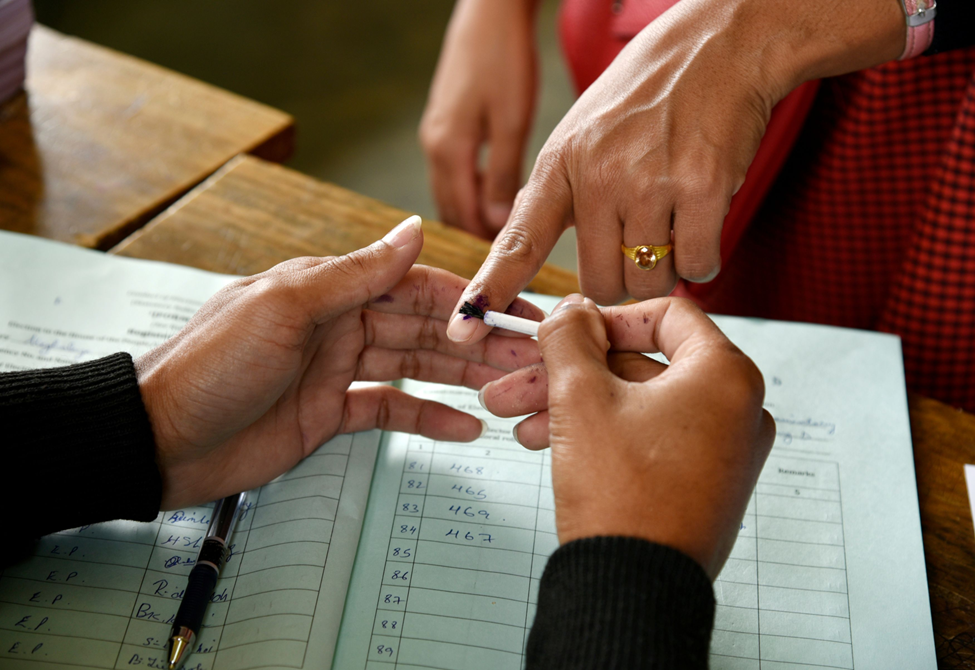
- Recently, India witnessed a powerful affirmation of its democratic spirit like in Assam, Puducherry and Kerala recorded some of the highest voter turnouts in their electoral history, reaffirming that citizens remain deeply engaged with the process of choosing their representatives.
- However, the same election cycle has surfaced critical questions about electoral roll integrity, potential disenfranchisement and the delicate balance between cleaning up voter lists and protecting every citizen’s right to vote, concerns that democracy cannot afford to ignore.
Background: What Happened?
- Turnout Figures: Puducherry led with 91.23% turnout, a historic high followed by Assam at 85.91% (all-time record) and Kerala at 78.27% (near-highest ever).
- Electoral Roll Revision as context: Ahead of the elections, the Election Commission of India (ECI) undertook the Special Intensive Revision (SIR) of voter rolls. Puducherry saw a 7.5% reduction in its electorate, Kerala saw a 3.2% reduction and Assam (under a Special Revision linked to the National Register of Citizens, NRC process) saw a reduction of less than 1%.
- ECI’s Response: Chief Election Commissioner hailed the high turnout as a ‘historic testimony’ not only for India but for the entire democratic world, a statement that reflects institutional pride but also calls for deeper scrutiny of what drove these numbers.
Importance of Voting — Why Every Vote Matters
- Voting Legitimises Governance: The principle of popular sovereignty, that state power derives from the consent of the governed is activated only through the act of voting.
- According to the International Institute for Democracy and Electoral Assistance (IDEA), countries with higher turnout levels tend to have stronger public trust in governmental institutions. When Assam recorded 85.91%, it signalled mass endorsement of the democratic process itself, not just one party.
- Voting Ensures Inclusive Representation: In democracies, low turnout among marginalised groups like women, migrants, tribal populations leads to policy blind spots.
- In Assam, large numbers of migrant workers travelled back to their home constituencies to vote, a striking demonstration that democratic participation transcends economic compulsion. This mirrors global examples like Belgium and Australia, where compulsory voting ensures all social strata are represented.
- High Turnout as a Check on Incumbency: Voter participation acts as a democratic audit mechanism. In all three states, ruling parties claimed the high turnout as a vote of confidence, while opposition read it as a surge for change.
- This interpretive contest is healthy it means voters, not elites, hold the decisive power. India’s Article 326 guarantees universal adult suffrage, and every high-turnout election reinforces this constitutional commitment.
- Turnout Reflects Civic Consciousness: In Kerala, anecdotal evidence suggests that its diaspora from West Asia who typically return during election seasons could not travel this time due to the ongoing war in the region, yet turnout remained near-historic. This indicates that domestic voters stepped up in unprecedented numbers, reflecting deep civic awareness.
- Voting as Resistance to Disenfranchisement: Paradoxically, concerns about the SIR process potentially excluding genuine voters may have spurred many citizens to actively confirm their registration and vote.
- This is a powerful dynamic, the threat of exclusion deepened the sense of ownership over one’s democratic right. India’s voter turnout has risen from 45.7% in 1952 to consistently above 65–70% nationally in recent decades (ECI data), reflecting growing democratic maturity.
Challenges — When Democracy Is Undermined Despite High Turnout
- Electoral Roll Shrinkage and Ghost of Disenfranchisement: While eliminating ghost voters and duplicate entries is legitimate, the SIR’s aggressive purging, 7.5% of Puducherry’s electorate and 3.2% of Kerala’s, risks removing genuine voters. A smaller denominator artificially inflates the turnout percentage without representing a real surge in participation. This is the danger of ‘throwing the baby out with the bathwater.
- NRC-Linked Anxieties in Assam: In Assam, where the National Register of Citizens (NRC) process has already excluded approximately 19 lakh people from citizenship (2019 data, Supreme Court), the ongoing Special Revision carries a particular emotional weight. For many, voting is not just a civic right but a desperate assertion of belonging. This creates electoral participation driven by fear rather than genuine democratic enthusiasm a qualitatively different form of turnout.
- ECI Facing Institutional Credibility Issues: The ECI has been facing criticism on multiple fronts like perceived delays in announcing election schedules, questions about voter roll management, and the implementation of the SIR. High turnout should not be used as a shield against these legitimate institutional concerns. Democratic institutions must be both functional and trusted.
- Migrant Voter Exclusion: While Assam saw migrants return, Kerala’s West Asian diaspora voters were effectively excluded due to geopolitical reasons. India lacks a robust overseas voting mechanism unlike countries like France or Estonia, where e-voting and proxy voting are available for citizens abroad.
- The Representation of the People Act, 1950 permits overseas voter registration, but physical presence for voting remains the dominant requirement a significant structural gap.
- Money Power and Electoral Malpractices: High turnout does not automatically mean free and fair elections. India’s electoral landscape continues to grapple with voter inducement, distribution of cash and goods, and intimidation in pockets.
- The ECI seized over ₹10,000 crore in cash and freebies during the 2024 General Elections (ECI data), a reminder that turnout statistics can coexist with compromised electoral integrity.
- Delimitation and Women’s Reservation upcoming tests: The impending Delimitation Exercise and implementation of 33% Women’s Reservation in Lok Sabha and State Assemblies (Constitution 106th Amendment Act, 2023) carry risks of partisan manipulation. If boundaries are redrawn to concentrate or dilute voter groups, high turnout becomes meaningless as representational distortion undermines democratic outcomes.
Global Best Practices — What India Can Learn
- Automatic Voter Registration (Canada, USA some states): Nations like Canada automatically register citizens when they interact with government services (e.g., getting a driving licence). This eliminates the risk of accidental exclusion during revision exercises. India could explore [Aadhaar Redacted] linked automatic voter registration with strong privacy safeguards.
- Independent Election Commissions (South Africa, Sweden): The South African Electoral Commission operates with structural independence backed by multi-party parliamentary oversight. India’s ECI, while constitutionally independent, has faced questions about the appointment process of commissioners. The Election Commission (Amendment) Act, 2023, which changed the selection panel, remains contentious and warrants revisiting.
- Remote and e-Voting for Diaspora (Estonia, France): Estonia has offered internet-based voting (i-voting) since 2005, enabling its global diaspora to participate without traveling home. Given India’s massive migrant and overseas population over 13 million non-resident Indians (NRIs) piloting secure e-voting platforms could dramatically expand democratic participation.
- Civic Education Programmes (Finland, Japan): Finland integrates electoral literacy into school curricula from an early age, ensuring young citizens understand not just the act of voting but the systemic value of democracy. India’s SVEEP (Systematic Voters’ Education and Electoral Participation) programme by ECI is a step in the right direction but needs deeper penetration in rural and tribal areas.
Way Forward — Building on the Momentum
1. Reform the SIR process, Inclusion over Exclusion: The ECI must adopt a principle of presumption of validity no voter should be deleted from the rolls without proper notice, adequate time for objection, and a clear appeals process. The use of [Aadhaar Redacted] linked databases for real-time verification can reduce ghost entries without mass deletions.
2. Strengthen Constitutional Safeguards around Delimitation: The upcoming delimitation exercise must be led by an independent commission with multi-party representation, transparent methodology, and judicial review mechanisms. Lessons from gerrymandering controversies in the USA should serve as a cautionary tale for India.
3. Implement Women’s Reservation with Equity in Mind: The 33% Women’s Reservation must not merely shift numbers it must be paired with capacity-building, political mentorship, and anti-proxy mechanisms to ensure elected women exercise genuine political agency and are not proxies for male family members.
4. Pilot Secure Overseas and Remote Voting: India should constitute an expert committee to evaluate e-voting pilots for NRIs and internal migrants (especially seasonal labour migrants), learning from Estonia’s cybersecurity framework. This would transform structural exclusion into democratic inclusion.
5. Restore Trust in the ECI through Structural Reforms: The appointment process for the Chief Election Commissioner and Election Commissioners must be insulated from executive dominance. A collegium-style mechanism with judicial participation as recommended by the Supreme Court in Anoop Baranwal v. Union of India (2023) should be reinstated.
6. Scale up SVEEP and Electoral Literacy: High turnout in three states must not breed complacency. Electoral literacy camps, SVEEP initiatives in schools and colleges, and media campaigns that explain the consequences of low participation especially in apathetic urban electorates should be scaled up nationally.
Conclusion
The record-breaking turnout in the 2026 polls serves as a powerful reminder that the Indian citizen views the ballot box as the ultimate tool for change and self-assertion. As the nation moves toward a new era of delimitation and gender parity, the focus must remain on making the electoral process more inclusive, transparent, and accessible to every single citizen.