
Context
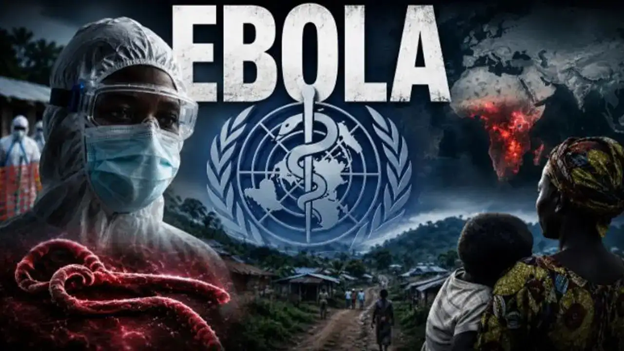
- The World Health Organization (WHO) has officially declared the ongoing Ebola outbreak in the Democratic Republic of Congo (DRC) and Uganda as a Public Health Emergency of International Concern (PHEIC).
- The outbreak originated in the Ituri province (eastern DRC) and has geographically expanded, reaching as far as Kinshasa (the capital, 1,000 km away) and crossing international borders into Uganda.
1.Decoding the Ebola Virus Disease (EVD)
- Pathogen: It is a severe, often fatal viral disease caused by a group of viruses known as orthoebolaviruses (formerly ebolavirus). The current outbreak is specifically driven by the Bundibugyo virus, a rare variant.
- Nature of Disease: It is classified as a hemorrhagic fever virus. It disrupts the body’s clotting system, leading to internal bleeding as blood leaks from small vessels.
- Historical Context: EVD was first identified in 1976 in dual outbreaks in southern Sudan and the DRC, primarily affecting remote villages in Central and West Africa.
2.Transmission Dynamics: How Does it Spread?
- Zoonotic Origin: The virus is initially transmitted to humans from wild animals, including fruit bats, porcupines, and non-human primates.
- Human-to-Human Spread: It spreads through direct contact with infected bodily fluids (such as blood, vomit, secretions, or semen) and surfaces contaminated with these fluids.
- Key Exclusions: Ebola is not transmitted by air.
- Infectious Period: Infected individuals are not contagious during the incubation period (which typically lasts 5 to 15 days, but can range from 2 to 21 days). They only become infectious once symptoms appear and remain so as long as the virus is in their blood.
3.Fatality and Treatment Landscape
- Fatality Rate: The disease is severe, with an average case fatality rate of around 50% (historically varying between 25% and 90% depending on the outbreak and viral strain).
- Treatment Constraints: There is currently no known cure, and critically, there are no approved vaccines or therapeutics available for the Bundibugyo variant.
- Medical Management: Chances of survival depend on early supportive care, which primarily consists of maintaining fluid and electrolyte balance, alongside the administration of blood and plasma to control bleeding.
4. What is a Public Health Emergency of International Concern (PHEIC)?
- Institutional Framework: It is the highest level of formal health alert declared by the WHO under the International Health Regulations (IHR).
- Core Criteria: A PHEIC is declared when a public health event is determined to be serious, sudden, unusual, or unexpected.
- Global Significance: The declaration indicates a high risk of international spread, making it a global health risk that necessitates an immediate, coordinated international medical response.
With respect to the clinical management of the Ebola Virus Disease, consider the following statements:
Statement-I: The current supportive therapy for an infected patient heavily involves the administration of blood and plasma.
Statement-II: Ebola is a hemorrhagic fever virus that disrupts the body's clotting system and causes severe internal bleeding.
Which one of the following is correct in respect of the above statements?
(a) Both Statement-I and Statement-II are correct and Statement-II explains Statement-I
(b) Both Statement-I and Statement-II are correct, but Statement-II does not explain Statement-I
(c) Statement-I is correct, but Statement-II is incorrect
(d) Statement-I is incorrect, but Statement-II is correct
Answer: [A]
Explanation:
Statement-I is correct: According to the text, in the absence of a known cure, current therapy primarily consists of maintaining fluid and electrolyte balance and administering blood and plasma to the patient.
Statement-II is correct and explains Statement-I: The conceptual reason (explanation) for this specific medical treatment is the fundamental nature of the disease; Ebola acts as a hemorrhagic fever virus that damages the clotting system and triggers internal bleeding, making blood and plasma replacement a critical life-saving measure.