
Context
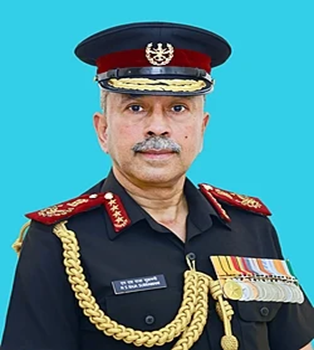
Recently, General N.S. Raja Subramani took charge as India’s third Chief of Defence Staff (CDS) on May 31, 2026, following the completion of General Anil Chauhan’s tenure. According to reports, this high-level transition is aimed at accelerating tri-service integration and advancing the implementation of integrated theatre commands.
1. Evolution of the Post
- Kargil Review Committee (1999): First officially proposed a unified military head to bridge inter-service coordination gaps.
- Group of Ministers (GoM) Report (2001): Formally recommended the establishment of the CDS.
- Naresh Chandra Task Force (2012): Suggested a permanent Chairman of the Chiefs of Staff Committee (CoSC) as a midway solution.
- Lt. Gen. D.B. Shekatkar Committee (2016): Reiterated the urgent need for a four-star CDS to enhance joint combat readiness.
- Creation: Formally approved by the Union Cabinet on December 24, 2019. General Bipin Rawat took charge as India’s first CDS on January 1, 2020.
2. Status and Rank
- Nature of Post: It is neither a constitutional nor a statutory body. It is an executive position created via amendments to the Government of India (Allocation of Business) Rules, 1961.
- Rank: A four-star military officer who is “first among equals” inside the Chiefs of Staff Committee. The CDS carries the same rank and pay scale as the three Service Chiefs but outranks them in the official Order of Precedence (12th rank).
3. Eligibility and Tenure
- Appointing Authority: Appointments Committee of the Cabinet (ACC), chaired by the Prime Minister.
- Eligibility: Serving or retired three-star (Lieutenant General/equivalent) or four-star (General/equivalent) military officers. The candidate must be below 62 years of age at the time of appointment.
- Tenure: No fixed term is specified, but the upper age limit to serve in the office is strictly capped at 65 years.
4. Core Mandates and Responsibilities
- Head of Department of Military Affairs (DMA): Functions as the administrative Secretary of the DMA within the Ministry of Defence, handling tri-service logistics, deployments, and promotional structures.
- Principal Military Advisor: Advises the Union Defence Minister on all tri-service matters. (Note: Individual Service Chiefs continue to advise the Minister on matters exclusive to their respective forces).
- Military Advisor to Nuclear Command Authority (NCA): Serves as the designated military advisor to the PM-led Political Council of the NCA.
- Permanent Chairman of CoSC: Heads the Chiefs of Staff Committee to ensure structural continuity across services.
- Theaterisation: Mandated to restructure the armed forces into integrated joint theatre commands to optimize operational efficiency.
- Command Restrictions: The CDS does not exercise direct operational military command over the individual Service Chiefs.
Q. Consider the following statements regarding the office of the Chief of Defence Staff (CDS) in India:
1. The office of the Chief of Defence Staff was created as a statutory body under an amendment to the National Security Act.
2. The maximum age limit up to which an officer can serve as the Chief of Defence Staff is 65 years.
3. The Chief of Defence Staff exercises direct operational and administrative command over the individual Chiefs of the Army, Navy, and Air Force.
Which of the statements given above is/are correct?
(a) 1 and 2 only
(b) 2 only
(c) 2 and 3 only
(d) 1, 2 and 3
Solution and Explanation
Correct Answer: (b) 2 only
• STATEMENT 1 IS INCORRECT: The office of the Chief of Defence Staff is an executive position created via amendments to the Government of India (Allocation of Business) Rules, 1961, rather than a statutory body.
• STATEMENT 2 IS CORRECT: As per the updated military service regulations, the maximum service age limit for holding the post of CDS is capped at 65 years.
• STATEMENT 3 IS INCORRECT: The CDS does not exercise direct operational or military command over the individual Service Chiefs, who retain direct operational control over their respective forces.