
Context
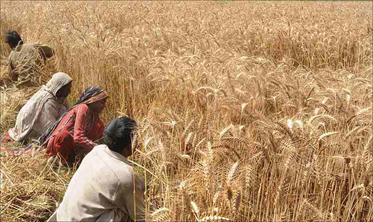
- Recently, a report by the Press Trust of India highlighted that India’s wheat procurement for the 2026-27 rabi marketing season surged by 17% to cross 35 million tonnes (MT), successfully exceeding the government’s target of 34.5 MT and surpassing the previous year’s procurement of 30 MT.
- This higher procurement was primarily driven by a robust domestic production of 120.65 MT—which sustained despite localized damage from unseasonal rain and hailstorms—causing market mandi rates to rule below the Minimum Support Price (MSP).
- State-wise trends show that Punjab led the procurement at 12.1 MT, while Madhya Pradesh witnessed a sharp jump to 10.4 MT, ensuring ample reserves for the Food Corporation of India (FCI) to meet national food security mandates.
Agro-Climatic Requirements for Wheat Cultivation
Wheat is a primary staple food grain and is classified as the second most crucial cereal crop in India after rice. It is fundamentally a Rabi crop, which means it is sown during the onset of winter and harvested during the spring season.
1. Temperature and Weather Conditions
- Sowing Stage: The crop requires a cool, moist climate during its early vegetative phase, with ideal sowing temperatures ranging between 10°C and 15°C.
- Ripening and Harvesting Stage: The crop necessitates warm, sunny, and dry conditions during its ripening and harvesting periods, with optimal temperatures ranging between 21°C and 26°C.
- Frost and Weather Vulnerability: Sudden temperature spikes or heatwaves during the grain-filling stage can compress the lifecycle, leading to shriveled grains, while heavy frost during the flowering stage can damage the yield.
2. Rainfall and Irrigation
- Water Requirement: Wheat requires a moderate annual rainfall between 50 cm and 75 cm distributed evenly across the growing period.
- Critical Irrigation Window: The crop can be grown successfully in low-rainfall zones if supported by timely irrigation, especially during the critical Crown Root Initiation (CRI) stage.
- Winter Showers: The light winter rains caused by Western Disturbances in the northwestern plains of India are highly beneficial for the vegetative growth of wheat.
3. Soil Profile
- Ideal Soil Type: The crop grows best in well-drained loamy, clayey-loamy, or alluvial soils that possess a high moisture-retention capacity.
- Unsuitable Conditions: Heavy black soil or overly sandy soils that do not drain effectively can restrict root development and trigger waterlogging, which severely undermines wheat health.
Production and Geographical Distribution in India
India stands as the second-largest producer of wheat globally, trailing only behind China, and the crop accounts for a significant share of the total foodgrain production in the country.
Major Producing Zones
- The Indo-Gangetic Plains: The fertile alluvial tract stretching across the northern and northwestern parts of India forms the primary wheat bowl of the country.
- Leading States: Punjab consistently leads in terms of productivity and per-hectare yield due to extensive irrigation coverage. Madhya Pradesh, Haryana, Uttar Pradesh, and Rajasthan follow as the other top-tier producers.
- Procurement Dynamics: According to the latest data from the Department of Food and Public Distribution, Punjab and Madhya Pradesh contributed the highest volumes to the central pool during the recent procurement drive, with Madhya Pradesh experiencing a sharp increase to 10.4 million tonnes.
Governance, Procurement, and Institutional Support
The government closely monitors and regulates the supply chain of wheat to ensure national food security and to shield domestic farmers from extreme price fluctuations.
1. Minimum Support Price (MSP)
- Price Guarantee: The central government announces the Minimum Support Price (MSP) for wheat ahead of the Rabi sowing season based on the recommendations of the Commission for Agricultural Costs and Prices (CACP).
- Cost Structure: The CACP recommends the price keeping in view the principle of ensuring a minimum of 50 percent margin over the all-India weighted average cost of production (measured via the A2+FL cost formulation).
2. Procurement and Buffer Norms
- Implementing Agencies: The Food Corporation of India (FCI), along with designated state agencies, executes open-ended procurement at the designated MSP.
- Food Security Mandate: The procured wheat is maintained in the Central Pool to fulfill the requirements of the National Food Security Act (NFSA), the Pradhan Mantri Garib Kalyan Anna Yojana (PMGKAY), and other welfare schemes.
- Buffer Stock Status: The government maintains quarterly buffer stock norms to handle emergency shortfalls, and current reserves are well above the statutory requirement of 275.80 lakh metric tonnes set for the start of July.
3. Trade and Export Framework
- Regulatory Stance: To balance domestic prices and prevent retail inflation, India maintains a restrictive export policy under the “Prohibited” category of the Foreign Trade Policy.
- Calibrated Relaxations: The Directorate General of Foreign Trade (DGFT) periodically permits exceptions, such as approving controlled export quotas to friendly nations under Government-to-Government (G2G) agreements to support global food security.
Q. Consider the following statements regarding wheat cultivation and procurement in India:
STATEMENT I: The growth of the wheat crop in the northern plains of India is highly favored by light winter rains resulting from Western Disturbances.
STATEMENT II: The Minimum Support Price (MSP) for wheat is legally mandated by the National Food Security Act (NFSA) and is declared by the Commission for Agricultural Costs and Prices (CACP).
Which one of the following is correct in respect of the above statements?
(a) Both Statement I and Statement II are correct and Statement II is the correct explanation for Statement I
(b) Both Statement I and Statement II are correct and Statement II is not the correct explanation for Statement I
(c) Statement I is correct but Statement II is incorrect
(d) Statement I is incorrect but Statement II is correct
Solution
Correct Answer: (c)
• STATEMENT I IS CORRECT: Western Disturbances originate in the Mediterranean region and bring vital winter rainfall to northwestern India during the Rabi season. This rainfall provides timely moisture that is highly beneficial for the vegetative phase of the wheat crop, thereby improving grain quality and total yield.
• STATEMENT II IS INCORRECT: The Minimum Support Price (MSP) is an administrative mechanism announced by the Cabinet Committee on Economic Affairs (CCEA) based on the advisory recommendations of the Commission for Agricultural Costs and Prices (CACP). It is not legally mandated by the National Food Security Act (NFSA), nor does the CACP declare it directly; the CACP only recommends it, while the CCEA makes the final decision.