
Context
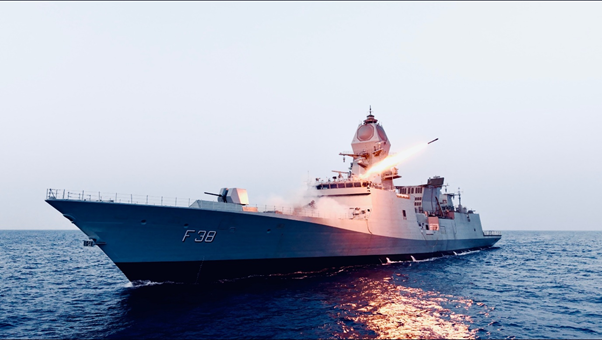
- The Indian Navy is set to commission its sixth indigenous Project 17A stealth frigate, INS Mahendragiri (F38), at Visakhapatnam on July 11. Designed to enhance advanced multi-role operational capabilities across the Indo-Pacific, this advanced frigate marks a major milestone in India’s indigenous warship-building program and the Atmanirbhar Bharat initiative.
What is INS Mahendragiri (F38)?
- Class : It is the sixth advanced stealth frigate of the Nilgiri Class under Project 17A.
- About frigate : A high-speed, maneuverable warship that is smaller than a destroyer but larger than a corvette. It operates as a multi-role combatant designed for anti-air, anti-surface, and anti-submarine warfare while escorting larger fleets.
- Design Architecture: The ship was designed entirely by the Indian Navy’s in-house Warship Design Bureau (WDB).
- Shipbuilding Partner: It was built by the premier defense public sector undertaking, Mazagon Dock Shipbuilders Limited (MDSL), in Mumbai.
- Geographical Naming: It is named after a prominent mountain peak in the Eastern Ghats located in Odisha.
What are its Key Features and Core Technologies?
- Stealth & Automation: The frigate is structurally engineered with advanced stealth features, a significantly reduced radar signature, and a very high degree of operational automation.
- Propulsion Configuration: It is equipped with a Combined Diesel or Gas (CODOG) propulsion plant configuration. This system comprises a diesel engine and a gas turbine driving a Controllable Pitch Propeller (CPP) on each shaft.
- Platform Management: The entire platform architecture is managed by a state-of-the-art Integrated Platform Management System (IPMS).
- Versatile Operational Spectrum: It is a multi-mission platform capable of simultaneously undertaking anti-air, anti-surface, and anti-submarine operations. It is equally suited for power projection, Humanitarian Assistance and Disaster Relief (HADR), and Search and Rescue (SAR) missions.
What is Project 17A?
- The Objective: Project 17A frigates are a follow-on class of the older Project 17 (Shivalik Class) frigates, designed with better stealth features, advanced weaponry, and high-tech sensors.
- The Fleet Lineup: A total of seven ships are being constructed under this project. The five precursors already delivered to the Indian Navy include:
- INS Nilgiri
- INS Himgiri
- INS Udaygiri
- INS Taragiri
- INS Vindhyagiri
- Potent Weaponry & Sensors: P17A vessels are heavily integrated with cutting-edge defense suites, including:
- MF-STAR: Active phased array radar for tracking multi-domain threats.
- BrahMos: Supersonic cruise missiles for potent anti-surface warfare.
- Barak-8: Long-range surface-to-air missiles (LRSAM) for comprehensive anti-air defense.
With respect to the newly commissioned stealth frigate 'INS Mahendragiri' and Project 17A, consider the following statements:
I. INS Mahendragiri is the final seventh ship of the Nilgiri Class designed independently by the Warship Design Bureau.
 II. These frigates are configured with Combined Diesel or Gas (CODOG) propulsion plants managed by an Integrated Platform Management System.
 III. The primary anti-surface weapon suite integrated onto Project 17A platforms is the BrahMos supersonic cruise missile.
How many of the statements given above are correct?
 (a) Only one
(b) Only two
(c) All three
(d) None
Answer: B
Explanation:
Statement I is incorrect: INS Mahendragiri is the sixth ship of the Nilgiri Class under Project 17A, not the seventh and final ship. However, it is correct that it was designed by the Warship Design Bureau.

Statement II is correct: Project 17A stealth frigates utilize a Combined Diesel or Gas (CODOG) propulsion plant configuration that drives a Controllable Pitch Propeller on each shaft, controlled via an Integrated Platform Management System (IPMS).

Statement III is correct: The potent weapon and sensor suite of P17A ships explicitly integrates the BrahMos supersonic cruise missile for anti-surface warfare alongside Barak-8 missiles for anti-air operations.