
Context
- Recently, the Hind Rajab Foundation filed a complaint with Indian authorities against an Israeli citizen visiting Himachal Pradesh, alleging involvement in war crimes during the Gaza conflict.
- The incident has renewed attention on the “Hummus Trail”, the Geneva Conventions, and India’s obligations under International Humanitarian Law (IHL).
What is the ‘Hummus Trail’?
- Definition: The Hummus Trail refers to a network of destinations in India that are particularly popular among Israeli tourists, especially young Israelis who travel after completing their mandatory military service.
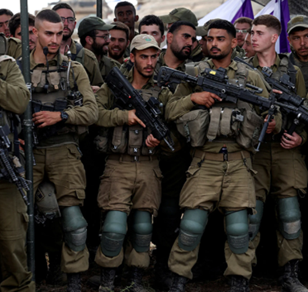
- Demography: Every year, roughly 80,000 Israelis visit India. A significant number are young soldiers who have just finished their mandatory military service in the Israeli Defence Forces (IDF), executing an extended trip (known as Tiul Gadol) to decompress.
- Geographical Hubs in India:
- North India: Kasol (often dubbed ‘Mini-Israel’), Old Manali, and Gondla Village in Himachal Pradesh; Rishikesh and Almora (Uttarakhand); Dharamkot (Himachal Pradesh); and Varanasi (Uttar Pradesh).
- South & West India: Hampi and Gokarna (Karnataka), Kodaikanal (Tamil Nadu), Goa, and the Andaman and Nicobar Islands.
What are the Geneva Conventions?
- The Geneva Conventions (1949) are the cornerstone of International Humanitarian Law (IHL).
- They establish rules for protecting persons who are not participating in hostilities during armed conflicts.
- India is a State Party to all four Geneva Conventions.
- First Convention: Protects wounded and sick soldiers on land.
- Second Convention: Protects wounded, sick, and shipwrecked military personnel at sea.
- Third Convention: Protects prisoners of war (POWs).
- Fourth Convention: Protects civilians during armed conflict and occupation.
- Domestic Legislation: India does not have a standalone, explicit domestic criminal statute defining or criminalizing “war crimes”. Instead, it has enacted the Geneva Conventions Act, 1960 to give effect to the international treaties.
India and the Geneva Conventions Act, 1960
- Criminalizes grave breaches of the Geneva Conventions.
- India can arrest any person, regardless of nationality, for such offences.
- The offence can be prosecuted even if committed outside India.
- If arrest is not possible, the Ministry of Home Affairs and the Bureau of Immigration may facilitate the deportation of the accused.
Difference Between International Humanitarian Law and Human Rights Law
| International Humanitarian Law | International Human Rights Law |
| Applies during armed conflict | Applies at all times |
| Regulates conduct during war | Protects fundamental human rights |
| Based mainly on Geneva Conventions | Based on international human rights treaties |
With reference to the Geneva Conventions, consider the following statements:
1. India is a party to all four Geneva Conventions of 1949.
2. The Fourth Geneva Convention deals primarily with the protection of civilians during armed conflicts.
3. Universal jurisdiction permits a State to prosecute certain grave international crimes irrespective of where they were committed or the nationality of the accused.
Which of the statements given above is/are correct?
(a) 1, 2 and 3
(b) 1 and 2 only
(c) 2 and 3 only
(d) 1 only
Answer: (a) 1, 2 and 3
Explanation
• Statement 1 is Correct:  India is a State Party to all four Geneva Conventions of 1949.
• Statement 2 is Correct: The Fourth Geneva Convention protects civilians during armed conflict and occupation.
• Statement 3 is Correct: Universal jurisdiction allows prosecution of grave international crimes regardless of where they occurred or the nationality of the accused.