
Context
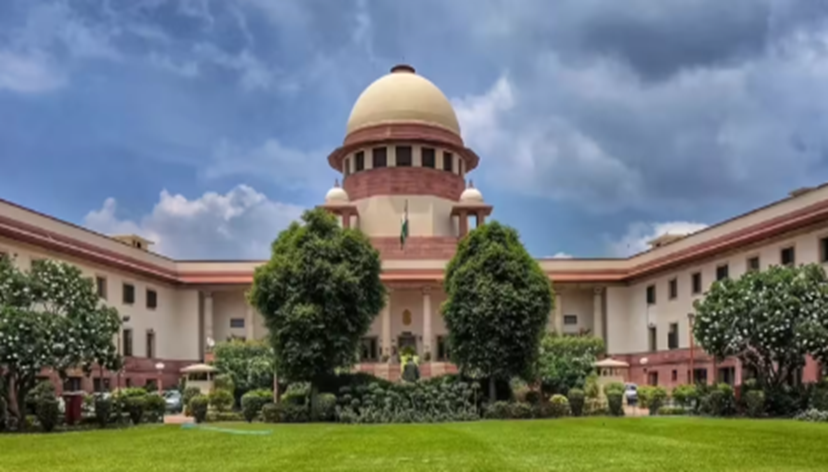
The Supreme Court, hearing the All India Judges Association case, directed all States and UTs to consider raising the retirement age of subordinate judicial officers from 60 to 61 years, pending its final decision on a uniform retirement age of 62 years.
Why the Suggestion Was Made
- Career stagnation and Pay disparities owing to limited promotional avenues among judicial officers.
- Loss of experienced judges at a time of rising case pendency and the need for uniformity in service conditions nationwide.
About the Subordinate Judiciary
- Comprises courts functioning below the High Courts: District & Sessions Courts, Civil Judges (Senior/Junior Division), Judicial Magistrates, Metropolitan Magistrates, and specialised courts such as Family and Commercial Courts.
- Governed constitutionally by Articles 233–237 under Part VI.
Appointment and Control
- District Judges are appointed under Article 233 by the Governor, in consultation with the High Court; eligibility requires at least 7 years as an advocate/pleader, or promotion within the judicial service.
- Article 235 vests control over subordinate courts — posting, promotion, leave, and discipline — in the High Court, safeguarding judicial independence from the executive.
Retirement Age
- Retirement Age Currently stands at 60 years, though it varies by State service rules while the Court’s suggestion of 61 years is a recommendation, not a mandate — States must amend their own service rules to give effect to it.
Implications
- Advantages: Retains experienced judges, reduces vacancies, speeds up case disposal, ensures uniform service conditions, and boosts morale.
- Concerns: May delay junior officers’ promotions, increase States’ salary/pension burden, and requires State service-rule amendments.
All India Judges Association Case
- AIJA v. Union of India: Landmark case driving reforms in subordinate judiciary through directions on uniform pay, service conditions, infrastructure, and career progression.
Constitutional Provisions
- Article 233A: Validates certain past District Judge appointments/promotions made despite procedural irregularities under Articles 233/235.
- Article 234: Governor recruits judicial officers (other than District Judges) as per rules framed after consulting the State PSC and High Court.
- Article 236: Defines “District Judge” and “judicial service.”
- Article 237: Extends these provisions to specified classes of Magistrates.
- Seventh Schedule (List III, Entry 11A): Administration of justice and organisation of subordinate courts fall under the Concurrent List, hence implementation rests with States/UTs.
| Important CTC from this article for UPSC All India Judges Association Judicial officers of India |
Q. With reference to the subordinate judiciary in India, consider the following statements:
I. Articles 233–237 of the Constitution deal with subordinate courts.
II. District Judges are appointed by the President of India.
III. The High Court exercises administrative control over subordinate courts.
IV. The retirement age of subordinate judicial officers is uniformly fixed by the Constitution.
Which of the statements given above is/are correct?
(a) I and II only
(b) I and III only
(c) II, III and IV only
(d) I, II, III and IV
Answer: (b) I and III only
Explanation:
• Statement I is Correct: Articles 233–237 deal specifically with Subordinate Courts.
• Statement II is Incorrect: District Judges are appointed by the Governor, not the President, under Article 233.
• Statement III is Correct: Administrative control over subordinate courts vests in the High Court under Article 235.
• Statement IV is Incorrect: The Constitution prescribes no uniform retirement age for subordinate judicial officers; it is governed by individual State service rules.