
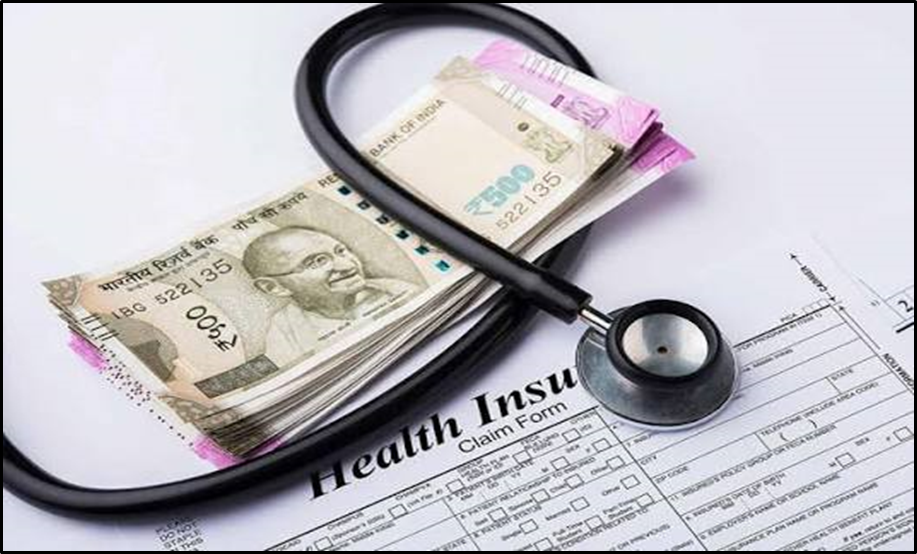
India’s Out-of-Pocket Expenditure (OOPE) constitutes a massive portion of its Total Health Expenditure (THE), acting as a primary driver of medical impoverishment and a critical barrier to Universal Health Coverage. While recent National Health Accounts (NHA) data indicates a structural shift towards public financing, high OOPE persists due to systemic healthcare gaps.
Core Concepts
- Out-of-Pocket Expenditure (OOPE): Direct payments made by households for health services at the point of care, entirely excluding third-party reimbursements or state subsidies.
- Catastrophic Health Expenditure (CHE): Defined by the WHO as health spending exceeding 40% of a household’s capacity-to-pay (SDG indicators additionally use a 10% expenditure threshold).
- The “Missing Middle”: A demographic of approximately 40 crore Indians who are too poor to afford private health insurance but do not qualify for state-subsidized schemes like PM-JAY.
Current Status of Health Financing
- Declining OOPE Trend: OOPE as a share of THE has substantially declined from 64.2% in 2013-14 to 43.4% in 2022-23.
- Rising Public Funding: Government Health Expenditure (GHE) now accounts for 43.7% of THE, up from 28.6% in 2013-14.
- GDP Allocation: GHE constitutes 1.43% of the GDP as of 2022-23.
- Global Gap: Despite domestic improvements, India’s OOPE remains significantly higher than the global average of 18-20%.
Why is OOPE so High?
- Sub-Optimal GDP Allocation: India invests well below the WHO-recommended target of 5% of GDP, forcing citizens toward the private sector for reliable care.
- Private Sector Reliance: The largely unregulated private sector delivers nearly 70% of outpatient and 60% of inpatient treatments.
- Pharmaceutical Burden: Medications drive outpatient OOPE (constituting ~60%), exacerbated by extreme price disparities reaching up to 3400%.
- Weak Primary Infrastructure: Inadequate Primary Health Centres (PHCs) force the routine referral of minor illnesses to costly tertiary hospitals.
Socio-Economic Impacts
- Poverty Induction: Healthcare costs push approximately 55 million Indians into poverty annually, reinforcing deep socio-economic disparities.
- Catastrophic Spending: 17% of Indian households spend over 10% of their income on health, rapidly eroding household savings.
- Debt Trap & Care Denial: Fear of unaffordable costs triggers care postponement, resulting in advanced diseases, while actual treatments force families into high-interest informal loans and distress asset sales.
Initiatives to Shield Citizens
- Ayushman Bharat (PM-JAY): Provides an annual ₹5 lakh hospitalization cover to over 10 crore vulnerable families.
- Ayushman Arogya Mandirs: Over 1.8 lakh wellness centres have been operationalized across the country, offering free essential diagnostics, drugs, and preventive care closer to rural communities.
- National Health Mission (NHM): Strengthens rural infrastructure and manpower to minimize reliance on expensive private care.
- Digital Health & Jan Aushadhi: eSanjeevani reduces costs via teleconsultations, while Jan Aushadhi Kendras distribute highly affordable generic medicines.
Conclusion
While recent NHA data highlights a commendable decline in OOPE, achieving Universal Health Coverage requires scaling public health financing to at least 2.5% of GDP. Strengthening primary care and expanding insurance for the “missing middle” remains critical to permanently shielding households from medical impoverishment.
| This Concept has been discussed in the following article: Towards Equitable Healthcare: Regulating Private Capital and Patient Welfare |