
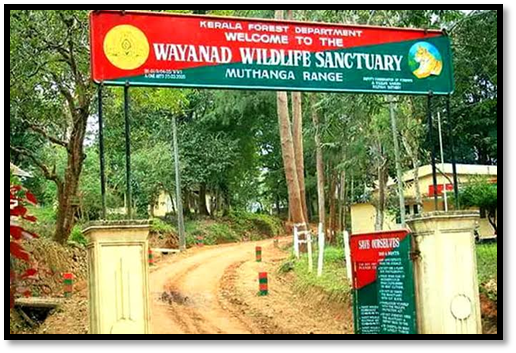
About WWS
- Location: Wayanad district, Kerala, in the Western Ghats.
- Establishment: Set up in 1973; brought under Project Elephant in 1991–92.
- Regional Connectivity: Continuous with protected areas of neighboring states—contiguous with Bandipur National Park and Nagerhole National Park (Karnataka) and Mudumalai Wildlife Sanctuary (Tamil Nadu).
Ecological & Biosphere Setting
- Nilgiri Biosphere Reserve: An integral part of the Nilgiri Biosphere Reserve (India’s first biosphere reserve to be included in the UNESCO World Network of Biosphere Reserves).
- Hydrography: The Kabini River, an important eastern-flowing tributary of the Cauvery River, flows through the sanctuary.
- Vegetation Mix: A mosaic of South Indian Moist Deciduous forests, West Coast semi-evergreen forests, and plantations (teak, eucalyptus, rosewood, and bamboo).
Fauna & Conservation Significance
- Mammals: Holds a significant population of Asiatic Elephants, Bengal tigers, Indian leopards, gaurs, sloth bears, and Nilgiri langurs.
- Avian Importance: Recognized as a safe haven for critically endangered vulture species, notably the White-Rumped Vulture (Gyps bengalensis) and the Red-Headed Vulture (Sarcogyps calvus).
| This concept has been elaborately discussed in the following article – Vultures Return to the Wayanad Landscape |