
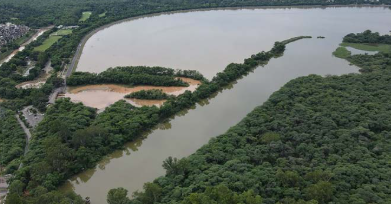
About Sukhna Wetland
- Location: Chandigarh, near the foothills of the Outer Himalayas.
- Type: Peri-urban reservoir.
- Ecological Significance:
- Supports diverse habitats, including open water, littoral vegetation, scrub and forest.
- Provides feeding, breeding, roosting and wintering habitats for resident and migratory waterbirds.
- Supports birds migrating along the Central Asian Flyway.
- Important Species:
- Common Pochard (Aythya ferina): Vulnerable.
- Pallas’s Fish Eagle (Haliaeetus leucoryphus): Endangered.
- Black Pond Turtle (Geoclemys hamiltonii): Endangered.
- Major Threats: Sediment inflow from the surrounding catchment and invasive plant species.
- Conservation Measures: Soil and moisture conservation, reduction of sediment inflow and removal of invasive plants.
About Sauj Jheel
- Location: Uttar Pradesh, in the floodplain of the Ganga River.
- Type: Shallow lake surrounded by agricultural land.
- Ecological Significance:
- Supports wetland biodiversity and waterbird populations.
- Forms part of a wider wetland landscape near Saman Bird Sanctuary, another Ramsar Site.
- Provides nesting, breeding and feeding habitats for various wetland species.
- Important Vegetation:
- Sacred Lotus (Nelumbo nucifera).
- Wild Sugarcane (Saccharum spontaneum).
- Important Bird Species:
- Sarus Crane (Grus antigone): Vulnerable.
- Greater Spotted Eagle (Clanga clanga): Vulnerable.
- Bird Conservation Significance: Supports more than 30,000 waterbirds and has been recognised as an Important Bird and Biodiversity Area (IBA) by BirdLife International.
- Conservation Measures: Seasonal fishing restrictions, regulation of fine-mesh fishing nets and control of cattle access.
Conclusion
Sukhna Wetland and Sauj Jheel highlight the ecological importance of India’s diverse wetland ecosystems. Sukhna Wetland supports resident and migratory birds near Chandigarh, while Sauj Jheel provides important habitats for waterbirds in the Ganga floodplain. Their conservation is important for biodiversity protection and the sustainable management of wetland ecosystems.
| This concept has been mentioned in the following article: Ramsar Sites In India |