
Introduction
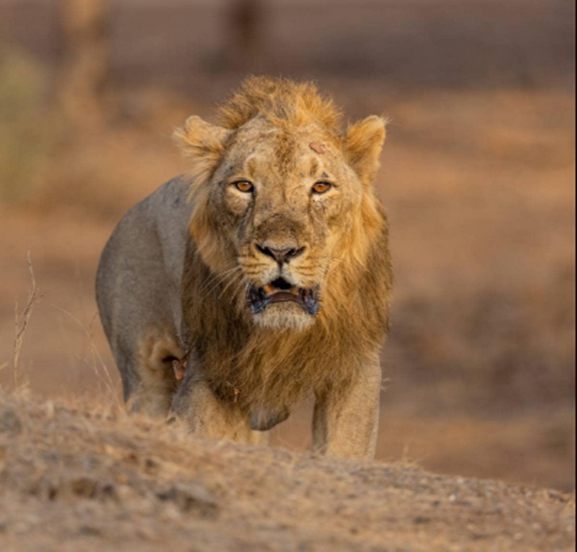
- The Asiatic Lion (Panthera leo persica) is one of the world’s most iconic and endangered big cats, representing India’s unique natural heritage.
- Once distributed across Southwest Asia to northern India, the species was pushed to the brink of extinction due to hunting and habitat loss. Today, the Gir landscape of Gujarat is the only natural habitat of wild Asiatic lions.
About Asiatic Lion
- Scientific Name: Panthera leo persica
- Common Name: Asiatic Lion
- Family: Felidae
- Order: Carnivora
- IUCN Red List Status: Endangered
- CITES: Appendix I
- Wildlife (Protection) Act, 1972: Schedule I (Highest level of protection)
- Endemic Population: Wild population survives only in Gir Landscape, Gujarat
Present Distribution of the Asiatic Lion
The Asiatic lion is currently found exclusively in the Greater Gir Landscape of Gujarat, making India the only country in the world with a wild population of this subspecies. Over the years, the lion’s range has expanded beyond the core protected area into the surrounding Saurashtra region.
The Greater Gir Landscape comprises:
- Gir National Park and Wildlife Sanctuary (Gir Somnath and Junagadh districts): The core habitat and primary breeding ground of the Asiatic lion.
- Girnar Wildlife Sanctuary (Junagadh district): An important satellite habitat that supports dispersing lion populations and enhances landscape connectivity.
- Mitiyala Wildlife Sanctuary (Amreli and Bhavnagar districts): Serves as a crucial dispersal area, facilitating the movement of lions between different habitats.
- Pania Wildlife Sanctuary (Amreli district): A smaller protected area that functions as an extension of the Gir ecosystem and provides additional habitat for lions.
Physical Characteristics
| Feature | Asiatic Lion |
| Body Length | 2.7–3 m |
| Weight | 160–190 kg (male) |
| Mane | Smaller than African lion |
| Belly Fold | Prominent longitudinal abdominal fold (distinctive feature) |
| Tail | Black tuft |
| Social Structure | Lives in prides |
| Lifespan | 15–18 years (wild) |
Ecological Importance
- Apex Predator: Maintains ecological balance by regulating herbivore populations.
- Keystone Species: Supports healthy trophic interactions and ecosystem resilience.
- Umbrella Species: Conserving lions protects the entire Gir ecosystem and associated biodiversity.
- Tourism Value: Wildlife tourism contributes significantly to Gujarat’s local economy and livelihoods.
Government Initiatives
Project Lion (2020)
Objectives:
- Habitat expansion
- Disease management
National Wildlife Action Plan (2017–2031)
Emphasises:
- Landscape-level conservation
- Species recovery
Integrated Development of Wildlife Habitats (IDWH)
Provides financial assistance for:
- Habitat restoration
- Infrastructure
National Board for Wildlife (NBWL)
- Policy guidance
- Protected area management
- Species conservation planning
Conclusion
Long-term conservation requires moving beyond population growth alone. Establishing multiple viable wild populations, ensuring habitat connectivity, strengthening disease preparedness, and adopting a landscape-based and One Health approach are essential to secure the future of this iconic species.
| This topic has been elaborately discussed under the article The Road Ahead for the Asiatic Lion: Securing India’s Endemic Big Cat Beyond Gir |