
Context
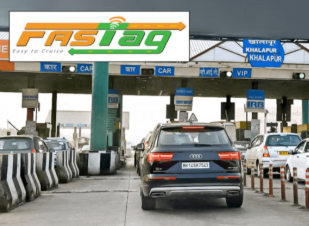
- FASTag enables electronic toll collection on National Highways, reducing the need for cash transactions and facilitating faster vehicle movement at toll plazas.
About FASTag
- FASTag is an electronic toll collection system based on Radio Frequency Identification (RFID) technology.
- It is affixed to a vehicle’s windscreen and linked to a prepaid account or bank account.
- When the vehicle passes through a FASTag-enabled toll plaza, the tag is read by an RFID reader, and the applicable toll is automatically deducted.
- FASTag is implemented under the National Electronic Toll Collection (NETC) programme.
How Does FASTag Work?
- RFID Tag: FASTag contains an RFID chip and antenna.
- Vehicle Detection: The RFID reader at the toll plaza detects the tag.
- Authentication: The system identifies the vehicle/tag and verifies the transaction.
- Automatic Deduction: The applicable toll is deducted electronically.
- Notification: The user receives a transaction alert through the linked system.
Key Features
- Technology: Radio Frequency Identification (RFID).
- Payment: Electronic/automatic toll deduction.
- Coverage: Primarily used at toll plazas on National Highways and other participating roads.
- Interoperability: A single FASTag can be used across participating toll plazas under the NETC ecosystem.
- Issuers: FASTags are issued through authorised banks and other eligible entities.
FASTag vs. GPS-Based Tolling
| FASTag | GPS-Based Tolling |
| Uses RFID technology | Uses satellite-based positioning |
| Toll collected at designated plazas | Potentially enables distance-based tolling |
| Requires RFID reader infrastructure | Requires location-based tracking infrastructure |
| Widely operational in India | Emerging alternative for future tolling |
Significance
- Reduces waiting time and congestion at toll plazas.
- Promotes cashless and contactless transactions.
- Improves transparency and efficiency in toll collection.
- Reduces fuel consumption and emissions caused by vehicle queues.
- Generates digital transaction records, aiding toll management.
Institutional Framework
- Ministry: Ministry of Road Transport & Highways (MoRTH).
- Implementing ecosystem: National Electronic Toll Collection (NETC).
- Technology: RFID-based electronic toll collection.
Conclusion
FASTag represents a key component of India’s digital and technology-enabled transport infrastructure, improving the efficiency, transparency and convenience of highway toll collection.