
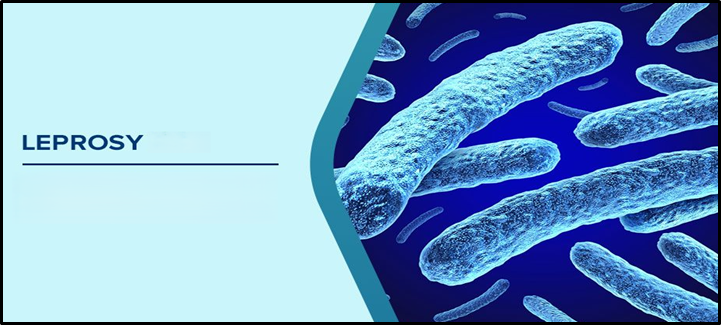
About Leprosy (Hansen’s Disease)
- Leprosy (Hansen’s disease) is a chronic bacterial infection caused by Mycobacterium leprae, mainly affecting the skin, peripheral nerves, eyes and upper respiratory tract.
- If untreated, it can cause nerve damage, sensory loss and permanent disability and is classified as a Neglected Tropical Disease (NTD).
Symptoms of Leprosy
- Skin lesions: Pale or reddish patches with reduced or complete loss of sensation.
- Nerve symptoms: Numbness, tingling and muscle weakness, especially in the hands and feet.
- Other symptoms: Thickened nerves, dry skin and loss of sensation in affected areas.
- Advanced cases: Untreated disease may lead to ulcers, deformities and disability.
Transmission and Clinical Features
- Mode of Spread: Airborne droplets from the nose and mouth during prolonged, close contact with an untreated patient.
- No Casual Spread: Not transmitted by handshakes, hugging, shared meals or sitting together.
- Infectivity: Patients cease to be infectious shortly after starting treatment.
- Early Signs: Pale or reddish skin patches with definite loss of sensation, nerve enlargement or tenderness, numbness in the extremities and painless ulcers on hands and feet.
Treatment, Prevention and Rehabilitation
- Multi-Drug Therapy (MDT): Completely curable with dapsone, rifampicin and clofazimine; kills the bacteria, halts progression and prevents secondary disabilities. Provided free through public health facilities with WHO support.
- Post-Exposure Prophylaxis (PEP): Contact screening with Single-Dose Rifampicin (SDR-PEP) for close contacts cuts the risk of developing leprosy by up to 60% over two years.
- Immunoprophylaxis: The MIP vaccine can augment long-term protection.
- Disability Rehabilitation: Micro-Cellular Rubber (MCR) protective footwear, self-care training and Reconstructive Surgery (RCS) for permanent deformities.
Leprosy Control in India
- Global Hotspots: Most new cases are detected in the South-East Asia Region, with India, Brazil and Indonesia reporting significant numbers.
- National Strategic Plan (2023–2027): Run by the National Leprosy Eradication Programme (NLEP) under the National Health Mission (NHM), aligned with the WHO Global Leprosy Strategy (2021–2030); targets zero transmission, zero disability and zero discrimination by 2027, ahead of SDG 3.3.
- Surveillance Tools: Nikusth 2.0 digital portal and Antimicrobial Resistance (AMR) surveillance networks for MDT drugs.
- Awareness Drive: The Sparsh Leprosy Awareness Campaign (SLAC), launched on Anti-Leprosy Day (30 January).
Conclusion
- Leprosy is a curable bacterial disease, and effective treatment and prevention can help reduce its health and social impact. India’s approach increasingly focuses on early treatment, prevention, rehabilitation and ending discriminationagainst persons affected by leprosy.
| This concept has been elaborately discussed in the following article – Breaking the Chain of Leprosy Transmission in India |