
After Reading This Article You Can Solve This UPSC Mains Model Question:
Heatwaves are emerging as a major climate and public health challenge in India. Discuss the role of climate change and urbanization in intensifying heatwave impacts. Suggest measures to enhance heat resilience in Indian cities. 15 Marks (GS-3, Environment)
Context
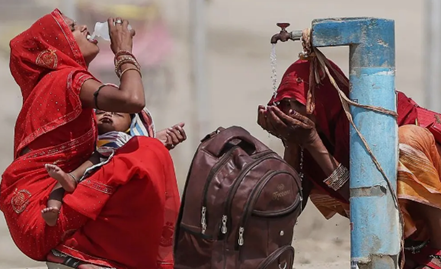
Sri Ganganagar (Rajasthan) recently recorded 48°C, marking the hottest temperature in India for the year amid a delayed monsoon.
Introduction
A heatwave is a period of abnormally high temperatures, crossing specified regional thresholds, that lasts for consecutive days and poses severe health and environmental risks.
Understanding the Heatwave Crisis in India
Rising Frequency and Intensity
- According to India Meteorological Department (IMD) data:
- Heatwave frequency has increased by 0.1 days per decade since 1961 in India’s Core Heatwave Zone.
- Maximum heatwave duration has increased by 0.55 days per decade.
- The period 2015–2025 has been identified by the World Meteorological Organization (WMO) as the warmest 11-year period on record.
Core Reasons for Heatwaves in India
- Anticyclonic Circulation: High-pressure systems over Central and Northwest India cause sinking air that compresses and heats up, while clearing cloud cover to let intense sunlight directly hit the ground.
- Advection of Hot Dry Air: Scorching winds blowing from the arid regions of Pakistan and Middle East Asia (such as the Loo) blanket Northwest and Central India in a thick layer of heat.
- The Urban Heat Island (UHI) Effect: Massive concretization, asphalt surfaces, and the waste heat pumped out by millions of air conditioners trap thermal energy, making Indian cities up to 10°C hotter than surrounding rural areas.
- Severe Deforestation and Loss of Moisture: Rapid depletion of urban green cover and drying water bodies eliminate the natural cooling effects of shade and evapotranspiration, allowing surfaces to bake rapidly.
- Global Climate Change and El Niño: Rising greenhouse gas emissions systematically raise baseline global temperatures, while periodic El Niño phenomena alter monsoon patterns, delay rains, and prolong extreme summer conditions.
Why Heat is More Lethal in Indian Cities
- The Urban Heat Island Effect: Massive concrete and asphalt surfaces absorb solar radiation all day and trap heat at night, keeping cities up to 10°C hotter than surrounding rural areas.
- Surging Microclimate Humidity: High levels of concrete cover seal the soil, preventing natural ground evaporation and driving up local humidity, which stops human sweat from evaporating and cooling the body.
- The Air-Conditioning Paradox: Thousands of air conditioners running simultaneously pump immense amounts of hot waste air directly onto the streets, making the outdoor environment dangerously hot for everyone else.
- High Concentration of Vulnerable Workers: A vast majority of urban populations consist of informal laborers, street vendors, and delivery workers who must work directly under the sun with zero access to cooling or shade.
Core Impacts of Heatwaves
- Severe Public Health Crises: Extreme heat leads to spikes in heat exhaustion, fatal heatstrokes, and dehydration, while placing an immense burden on rural and urban healthcare infrastructure.
- Stark Economic and Productivity Losses: Millions of informal outdoor workers experience drastically reduced working hours, leading to a direct drop in daily wages and overall macroeconomic productivity.
- Agricultural and Food Security Risks: Prolonged heatwaves dry up topsoil moisture, scorch standing crops, and deplete water bodies, resulting in lower crop yields and localized spikes in food inflation.
- Severe Power Grid and Water Stress: A soaring demand for cooling drives electricity consumption to record highs—causing frequent grid failures—while accelerating the rapid depletion of critical drinking water reservoirs.
- Exacerbation of Urban Climate Inequity: The thermodynamic waste heat from air-conditioned buildings actively worsens outdoor conditions, disproportionately punishing the urban poor who lack access to cooling tech.
Challenges in Current Response to Heatwaves
- Treating Heat as an Episodic Disaster: Policy responses treat heatwaves as brief, seasonal weather anomalies rather than structural, economy-wide risks that permanently alter urban and labor landscapes.
- Widespread Non-Enforcement of Labor Laws: While structural Heat Action Plans (HAPs) exist on paper, municipal and labor authorities routinely fail to enforce mandatory afternoon rest-intervals for vulnerable outdoor workers.
- The Vicious Cycle of Technological Fixes: State adaptation measures rely heavily on short-term fixes like scaling up air-conditioning, which actively intensifies outdoor street heat through thermodynamic waste emissions.
- Severe Under-Reporting of the True Health Burden: Fragmented data collection and a lack of public-private tracking systems mean most heat-related morbidity, chronic kidney strain, and deaths go unrecorded or misclassified.
- Deep Financial Inequity in Adaptive Capacity: Parametric heat insurances and government cooling infrastructure underperform because impoverished informal laborers cannot afford to forfeit daily wages to seek shelter.
Way Forward
- Enforce Mandatory Climate-Driven Labor Frameworks: Legally bind employers to halt outdoor informal labor when local wet-bulb temperatures cross safe physiological thresholds, backing it with spot inspections.
- De-congest Cities with Cool Roofs and Urban Forests: Mandate light-reflective materials on public buildings and expand native Miyawaki micro-forests to actively dismantle urban heat islands.
- Deploy Targeted Fiscal Allocations for Heat Adaptation: Establish dedicated national and state budget heads to fund public hydration booths, subsidized cooling centers, and direct wage compensation for lost workdays.
- Overhaul Building Codes for Climate Resilience: Revise municipal bylaws to strictly enforce passive cooling designs, proper cross-ventilation, and strict caps on glass-and-concrete architectures.
- Institutionalize Heat Action Plans as Regular Urban Planning: Transition Heat Action Plans from temporary emergency responses into year-round, legally enforceable mandates integrated into master city planning.
Conclusion
India must transition from reactive emergency relief to structural urban resilience. Integrating climate-calibrated building codes, enforcing occupational heat thresholds, and securing dedicated fiscal budgeting are imperative to protect vulnerable populations and ensure sustainable economic productivity.