
Context
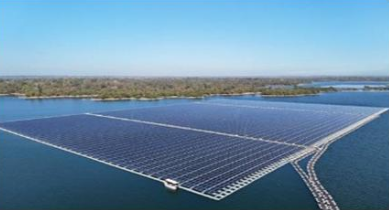
In a significant milestone for India’s energy transition, the Union Ministry of New and Renewable Energy (MNRE) recently confirmed that India added a record 44 gigawatts (GW) of solar capacity in the calendar year 2025. This surge has catapulted India’s total installed solar capacity to 150 GW, reinforcing its position as the world’s third-largest solar power producer. The growth is primarily attributed to robust policy interventions and decentralized solar missions.
1. Major Growth Drivers
The Ministry highlighted three primary schemes that acted as catalysts for this record-breaking year:
- PM Surya Ghar: Muft Bijli Yojana:
- Objective: To provide free electricity (up to 300 units) to 1 crore households by installing rooftop solar.
- Subsidy: Offers up to 40% subsidy for systems up to 3 kW.
- Production Linked Incentive (PLI) Scheme:
- Focus: “National Programme on High-Efficiency Solar PV Modules.”
- Goal: To reduce import dependence (especially from China) by incentivizing domestic manufacturing of solar cells and modules.
- PM-KUSUM:
- Focus: De-dieselizing the agricultural sector by providing solar pumps and solarizing existing grid-connected pumps.
2. Alignment with National & International Targets
- Panchamrit Targets (COP26): India aims to reach 500 GW of non-fossil fuel energy capacity by 2030.
- NDC Achievement: India has already achieved its commitment to have 50% of its installed electricity capacity from non-fossil sources in 2025, five years ahead of the 2030 deadline.
- Energy Mix: Solar now contributes approximately 53% of India’s total Renewable Energy (RE) segment.
3. Global Renewable Energy Installed Capacity
| Country | Capacity (GW) |
| China | 2258.02 |
| USA | 467.92 |
| India | 250.52 |
| Brazil | 228.20 |
| Germany | 199.92 |
| Japan | 134.53 |
| Canada | 110.51 |
| World | 5149.28 |
4. Renewable Energy Installed Capacity – Sector-wise (GW)
Data Reference: Late 2025 (PIB/MNRE)
Detailed Capacity Table
| Sector | Installed Capacity (GW) |
| Solar Power (a) | 132.85 |
| Wind Power (b) | 53.99 |
| Bio Energy (c) | 11.61 |
| Small Hydro (d) | 5.16 |
| Hybrid / RTC / FDRE (e) | — |
| Sub-Total (Renewables excl. Large Hydro) (f = a+b+c+d+e) | 203.61 |
| Large Hydro (g) | 50.35 |
| Total RE (f + g) | 253.96 |
| Nuclear Power (h) | 8.78 |
| Total Non-Fossil Fuel (f + g + h) | 262.74 |
5. All India Electricity Installed Capacity
Data as of: November 30, 2025
| Sector | Capacity (in GW) | Percentage (%) |
| Thermal (a) | 246.90 GW | 48.45% |
| Nuclear (b) | 8.78 GW | 1.72% |
| Renewable Energy (including large Hydro) (c) | 253.96 GW | 49.83% |
| Sub-Total (Non-Fossil Fuel) (b + c) | 262.74 GW | 51.55% |
| Total (a + b + c) | 509.64 GW | 100% |
Consider the following statements regarding India’s renewable energy sector:
1. Solar power accounts for the largest share in India’s renewable energy installed capacity.
2. India became the world’s second-largest producer of solar power in 2025.
Which of the statements given above is/are correct?
(a) 1 only
(b) 2 only
(c) Both 1 and 2
(d) Neither 1 nor 2
Answer:
(a) 1 only
Explanation:
• Statement 1 is correct: Solar power has the highest installed renewable energy capacity in India.
• Statement 2 is incorrect: India is the world’s third-largest solar power producer, not second-largest.