
Context
In a significant setback for Project Cheetah, four one-month-old cheetah cubs were found dead in the Sheopur district of Madhya Pradesh. These cubs were particularly notable as they were the first to be born in the open forest rather than in specialized enclosures since the reintroduction programme began in 2022. Preliminary investigations by forest officials suggest the deaths resulted from predation, likely by a leopard, highlighting the challenges of inter-species competition in the wild.
1. Project Cheetah: Challenges in Open Forest Success
- Location: Kuno National Park, Madhya Pradesh (Sheopur Territorial Division).
- Status of Cubs: The litter was born on April 11 and was part of the first successful birth in a non-enclosed, open-forest environment.
- Cause of Death: Suspected predation by a leopard; carcasses were found partially eaten near the den site.
2. Significance for Wildlife Management
- Inter-species Competition: The incident underscores the threat posed by co-predators like leopards, which share the same habitat as the reintroduced cheetahs.
- Acclimatization Hurdles: Success in Project Cheetah is measured by the ability of the species to survive and reproduce in the unprotected open forest; this loss represents a major hurdle in establishing a self-sustaining wild population.
3. About the Kuno National Park (KNP)
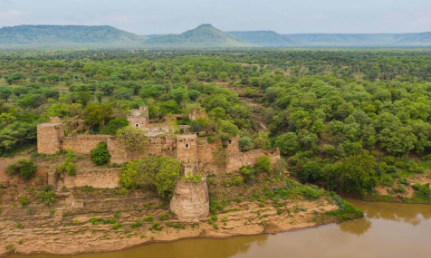
- Location: Situated in the Vindhyan Hills in the Sheopur and Morena districts of Madhya Pradesh.
- Vegetation: Primarily consists of dry deciduous forests and open grasslands (Savannah-type), which are ideal for high-speed predators like cheetahs.
- River: The Kuno River, a major tributary of the Chambal River, flows through the park.
- History: It was originally selected for the Asiatic Lion Reintroduction Project before becoming the primary site for the world’s first intercontinental large wild carnivore translocation project (Project Cheetah).
4. About The Cheetah Species
I. Sub-species and Conservation Status
- African Cheetah (Acinonyx jubatus jubatus):
- IUCN Status: Vulnerable.
- Habitat: Mostly found in Africa (Namibia, South Africa). These are the cheetahs currently being reintroduced in India.
- Asiatic Cheetah (Acinonyx jubatus venaticus):
- IUCN Status: Critically Endangered.
- Habitat: Survives only in Iran.
- Extinction in India: Officially declared extinct in India in 1952 due to overhunting and habitat loss.
II. Biological Traits
- Speed: The fastest land animal, capable of reaching speeds up to 110 km/h.
- Diurnal Nature: Unlike most big cats (lions/tigers/leopards) that are nocturnal, cheetahs hunt primarily during the day to avoid competition with larger predators.
- Social Structure: Females are solitary (except when raising cubs), while males often live in small groups called coalitions.
Consider the following statements regarding Kuno National Park and Project Cheetah:
1. Kuno National Park was initially identified for the Asiatic Lion Reintroduction Project.
2. The Asiatic Cheetah is currently found in India and is classified as Vulnerable by the IUCN.
3. Cheetahs are primarily diurnal animals and generally hunt during the daytime.
Which of the statements given above is/are correct?
(a) 1 and 2 only
(b) 1 and 3 only
(c) 2 and 3 only
(d) 1, 2 and 3
Answer: (b) 1 and 3 only
Explanation:
• Statement 1 is correct. Kuno National Park was originally selected for the Asiatic Lion Reintroduction Project.
• Statement 2 is incorrect. The Asiatic Cheetah survives only in Iran and is classified as Critically Endangered by the IUCN.
• Statement 3 is correct. Unlike many other big cats, cheetahs are mainly diurnal hunters.