
Context
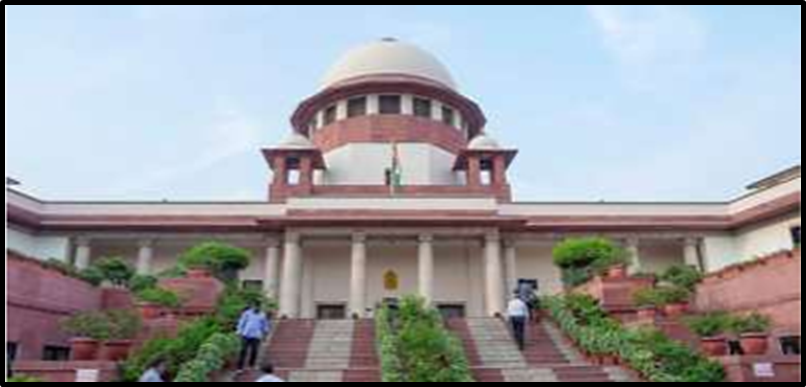
The Supreme Court will hear the case before a 7-judge Constitution Bench from 6 October 2026 to decide whether legislative privileges of State Legislatures under Article 194 can override the fundamental right to freedom of speech and expression under Article 19(1)(a).
Origin of the Case
- In 2003, The Hindu published an editorial critical of the Tamil Nadu Assembly and its functioning.
- The Assembly considered the publication a breach of legislative privilege and ordered the arrest of journalists.
- The journalists approached the Supreme Court, arguing that the Assembly’s privilege could not override their freedom of speech and press freedom.
- The issue became complicated because earlier Supreme Court judgments had taken apparently different approaches to the relationship between legislative privilege and fundamental rights. Therefore, the matter has now been placed before a larger 7-judge Bench.
Constitutional Provisions Involved
- Article 194(3): Governs the powers, privileges and immunities of State Legislatures and their members.
- Article 19(1)(a): Guarantees the fundamental right to freedom of speech and expression.
- Article 21: Right to life and personal liberty, examined for interplay with legislative privilege.
Recent Developments
- Procedural Hearing: Case heard on 2 February 2024 for change of advocate-on-record.
- Current Status: Matter listed before CJI Surya Kant on 12 August 2026; substantive hearing to commence 6 October 2026.
- Assistance Sought: Attorney General of India requested to assist the Court.
Why is this article important for UPSC?
- Understanding the concept of legislative privileges under Article 194.
- Understanding the interplay between Articles 19, 194 and 21 of the Constitution, relevant to fundamental rights.
- Understanding the Constitution Bench referral process in the Supreme Court.
In this article, you will understand:
- Origin of the legislative privilege case
- Sequence of Bench referrals over the years
- Key constitutional provisions involved
Q. With reference to the case concerning the breach of legislative privilege involving The Hindu and the Tamil Nadu Legislative Assembly, consider the following statements:
1. The case originated from a 2003 resolution of the Tamil Nadu Legislative Assembly alleging breach of privilege by The Hindu under Article 194 of the Constitution.
2. The Union Government was impleaded as a party in 2023 by a seven-judge Bench headed by then Chief Justice of India D.Y. Chandrachud.
3. The matter was referred directly from the five-judge Constitution Bench to a seven-judge Bench in 2003, without any intervening reference.
Which of the statements given above is/are correct?
(a) 1 and 2 only
(b) 2 and 3 only
(c) 1 and 3 only
(d) 1, 2 and 3
Answer: (a) 1 and 2 only
Explanation
• Statement 1 is Correct: The case arose from a 2003 resolution of the Tamil Nadu Legislative Assembly alleging breach of privilege by The Hindu. The issue involved the scope of legislative privileges under Article 194 of the Constitution.
• Statement 2 is Correct: The Union Government was impleaded as a party on 12 October 2023 by a seven-judge Constitution Bench headed by then CJI D.Y. Chandrachud.
• Statement 3 is Incorrect: The matter was initially referred by a two-judge Bench to a five-judge Constitution Bench in 2003. Subsequently, the five-judge Bench referred the matter to a seven-judge Bench in 2004. Therefore, there was an intervening reference, and it was not a direct 2003 reference from the five-judge to the seven-judge Bench.