
After Reading This Article You Can Solve This UPSC Mains Model Question:
The effectiveness of democratic decentralisation depends more on the quality of citizen participation than on the number of local institutions. In this context, examine the challenges faced by Gram Sabhas in India and suggest measures to strengthen grassroots democracy. (15 Marks, GS 2 Polity)
Context
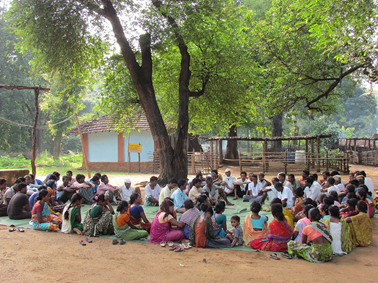
A recent Rural Development Ministry survey highlights declining participation in Gram Sabha meetings, attributing it to “participation fatigue.” While the report recommends greater monitoring and digital tools, it overlooks deeper structural issues such as weak fiscal autonomy, livelihood constraints, and the erosion of local decision-making, raising concerns about the health of India’s grassroots democracy.
Core Analysis: The Anatomy of Grassroots Erosion
The 73rd Constitutional Amendment Act, 1992, envisioned the Gram Sabha as the bedrock of participatory democracy. However, the ground reality shows a shift from substantive democracy to procedural compliance:
- The Digital Bureaucracy Trap: Administrative mandates like the NIRNAY app and real-time uploading of minutes shift the focus of Panchayat secretaries from community facilitation to digital data entry.
- Manufactured Consent under PESA: Despite strong physical infrastructure in PESA (Provisions of the Panchayats Extension to the Scheduled Areas) zones, the statutory right of Gram Sabhas to give “prior informed consent” for mining and land acquisition is frequently bypassed or manufactured by officials, as highlighted by protests in areas like Hasdeo Arand.
- The “Leisured Elite” Domination: Because attendance at Gram Sabhas is not financially protected or institutionalized as a component of social security, the daily-wage working class cannot afford to lose a day’s livelihood. Consequently, meetings are dominated by landlords and contractors.
Systemic Challenges
- Fiscal Centralization and Tied Grants: Gram Panchayats spend only 4% of their time discussing revenue generation because they are structurally constrained from raising local taxes. Furthermore, the 14th and 15th Finance Commission grants heavily “tie” funds to central flagships like the Jal Jeevan Mission and Swachh Bharat Abhiyan, leaving zero fiscal autonomy for local priorities.
- Technological Disenfranchisement: Excessive reliance on centralized digital systems creates opportunities for bureaucratic evasion. Lax oversight allows officials to dismiss valid MGNREGA work demands by blaming unverified “server errors.”
- Structural Livelihood Barriers: More than half of the barriers preventing citizens from attending Gram Sabhas are tied directly to the precarious nature of rural labor and low wages, forcing a choice between immediate survival and civic participation.
- Reduction to Clearinghouses: Instead of acting as self-governing deliberative bodies that identify local issues (which currently occupies only 13% of their time), Gram Sabhas have been reduced to top-down clearinghouses meant to validate schemes designed in Delhi.
- The Illusion of Choice: The state routinely treats Gram Sabha consultations as a rubber-stamping exercise. If the right of a local community to say “no” to a project is not legally and operationally protected, democratic consultation becomes an empty ritual.
Significance of Empowered Gram Sabhas
- Ensures True Inclusivity: Active Gram Sabhas give a political voice to marginalized sections, women, and Scheduled Tribes, breaking traditional rural hierarchies.
- Bottom-Up Accountability: Regular deliberative meetings act as a permanent social audit mechanism over local bureaucracy and the utilization of public funds.
- Context-Specific Development: Local populations are best equipped to identify unique ecological and economic needs, leading to efficient resource allocation rather than one-size-fits-all central models.
- Conflict Resolution and Direct Democracy: In tribal and ecological hotspots, robust Gram Sabhas prevent alienation and radicalization by legally protecting community land rights and resource ownership.
- Deepening Democratic Culture: It transitions the citizenry from being passive beneficiaries of state charity to active stakeholders and decision-makers in governance.
Way Forward
- De-link and Untie Development Funds: A substantial portion of Finance Commission allocations must be converted into “untied grants,” giving Gram Panchayats the autonomy to fund local needs outside central flagship templates.
- Institutionalize “Paid Participation” Compensations: To counter economic exclusion, the state should explore compensating lost daily wages for rural laborers attending statutory Gram Sabha meetings, integrating it into broader social protection frameworks.
- Enforce Veto Rights under PESA and Forest Rights Act: Legislative and administrative loopholes must be plugged to ensure that the “prior informed consent” of tribal Gram Sabhas is an absolute, non-negotiable prerequisite for industrial and mining projects.
- Revitalize Local Revenue Generation: Incentivize and legally empower Panchayats to levy and collect local property taxes, professional taxes, and user fees to reduce their complete dependence on devolution grants.
- De-bureaucratize and Humanize Technology: Reposition digital tools like the NIRNAY app as backend support systems rather than real-time compliance burdens, freeing up Panchayat secretaries to focus on community mobilization.
- Capacity Building and Awareness Drives: Conduct structured training for Gram Panchayat representatives and regular awareness campaigns for citizens regarding their statutory rights to deliberate, dissent, and decide.
Conclusion
To realize the true vision of the 73rd Amendment, the state must replace digital compliance with genuine devolution of the 3Fs. Transforming Gram Sabhas into autonomous, economically secure self-governments is vital to safeguarding India’s democratic and ecological future.