
Context
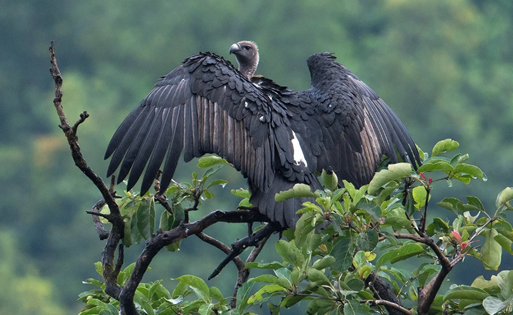
- A captive-bred, radio-tagged White-rumped vulture released in the Mudumalai Tiger Reserve (MTR) of Tamil Nadu was electrocuted after coming into contact with an overhead power line at Ebbanad village.
- The bird, which failed to acclimatise to the local landscape, had embarked on exploratory flights prior to its death, marking an unfortunate end to the first attempted reintroduction of a captive-bred bird of this species into the South Indian landscape.
About Mudumalai Tiger Reserve (MTR)
- Location: Situated at the tri-junction of three states—Tamil Nadu, Karnataka, and Kerala—in the Nilgiris district of Tamil Nadu.
- Ecological Significance: It forms an integral part of the Nilgiri Biosphere Reserve (India’s first biosphere reserve, established in 1986).
- Contiguous Connectivity: It shares boundaries with the Wayanad Wildlife Sanctuary (Kerala) to the west and the Bandipur Tiger Reserve (Karnataka) to the north, functioning as a vital ecological corridor connecting the Western and Eastern Ghats.
- Drainage System: The Moyar River, along with its tributaries, flows through the reserve and serves as its primary water source.
- Flora & Terrain: The landscape features undulating terrain covered with ‘Elephant Grass’, giant bamboo, and unique swampy areas locally known as Vayals.
- Fauna: It serves as a critical habitat for flagship species like the Bengal Tiger and Asian Elephant, alongside Indian Gaurs, Leopards, and globally threatened avian species like the White-rumped Vulture.
- Significance of Mudumalai: MTR and the surrounding Sigur plateau are home to the last sizable and viable breeding population of White-rumped vultures in South India. Conservationists hoped the captive-bred bird would associate with resident flocks and seamlessly adapt.
About White-Rumped Vulture (Gyps bengalensis)
Basic Profile
- Scientific Name: Gyps bengalensis. It is also commonly referred to as the Indian White-backed Vulture or Oriental White-backed Vulture.
- Physical Features: It is a medium-sized Old World vulture characterized by an unfeathered head and neck, very broad wings, and short tail feathers. Adults sport a distinctive white neck-ruff and a white patch of feathers on the lower back and upper tail (the “white rump”).
- Feeding Habits: It is primarily a scavenger that feeds on animal carcasses, utilizing thermal currents to soar high and spot other scavengers feeding.
Habitat and Distribution
- Global Spread: Native to South and Southeast Asia, including India, Pakistan, Bangladesh, Nepal, Bhutan, Myanmar, Thailand, Laos, Cambodia, and southern Vietnam.
- Favorable Habitat: Predominantly found in plains and less frequently in hilly terrains. It is highly adapted to living in proximity to human habitation and cultivated villages where livestock carcasses are available.
Conservation Status
- IUCN Red List: Classified globally as Critically Endangered.
- Population Crash: In the 1980s, it was considered the most abundant large bird of prey in the world with millions of individuals. As of 2021, the global population plummeted to fewer than 6,000 mature individuals.
Major Threats to Survival
- Diclofenac Poisoning: The most devastating threat is the veterinary non-steroidal anti-inflammatory drug (NSAID) diclofenac. Vultures feeding on the carcasses of cattle treated with this drug suffer fatal kidney failure.
- Power Infrastructure: Uninsulated power transmission lines pose a severe threat of fatal electrocution or collision for large, wide-winged birds.
- Secondary Poisoning: Consumption of poisoned baits meant for feral dogs or wild carnivores.
- Habitat Degradation: Loss of safe nesting sites and severe food scarcity due to changing livestock disposal practices.
With respect to the White-Rumped Vulture, consider the following statements:
I. It is a migratory New World scavenger that avoids areas near human cultivation and nests exclusively in high, mountainous alpine terrains.
II. It is currently classified as Critically Endangered under the IUCN Red List due to severe population decline caused by veterinary diclofenac poisoning.
Which of the statements given above is/are correct?
(a) I only
(b) II only
(c) Both I and II
(d) Neither I nor II
Answer: b
Explanation:
Statement 1 is incorrect: The White-rumped Vulture is an Old World vulture native to South and Southeast Asia. It is predominantly found in plains and can frequently be seen in villages and cities near to cultivation, rather than exclusively in alpine mountain terrains.
Statement 2 is correct: The species holds a Critically Endangered status on the IUCN Red List after its global population crashed from millions to less than 6,000 mature individuals, a decline primarily driven by fatal kidney failure after consuming livestock treated with the veterinary drug diclofenac.