
Context
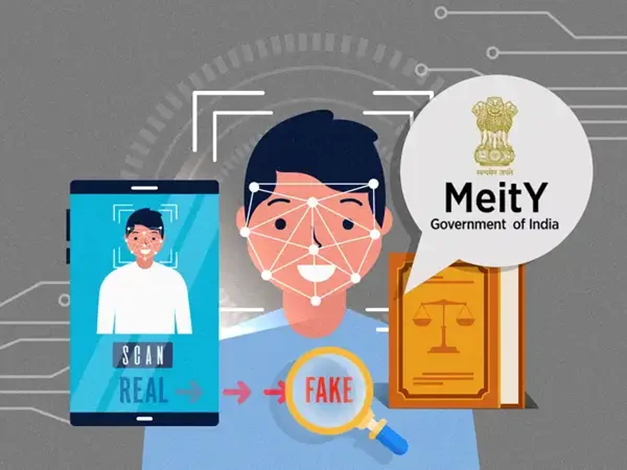
Recently, the Ministry of Electronics and Information Technology (MeitY) notified the IT (Intermediary Guidelines and Digital Media Ethics Code) Amendment Rules, 2026. These rules mandate the clear labeling of photorealistic AI-generated content (deepfakes) to prevent the spread of synthetic misinformation and enhance digital accountability.
Key Highlights of the IT Amendment Rules, 2026
1. Definition of Synthetically Generated Information (SGI)
- Scope: Covers audio, visual, or audio-visual data created or modified using AI/algorithms.
- Criterion: Information that appears authentic/real to a reasonable person, making it indistinguishable from actual events or persons.
2. Mandatory Labeling & Metadata
- Prominent Labels: Platforms must ensure AI-generated content is clearly marked as “Synthetic” or “AI-generated.”
- Provenance: Permanent metadata or digital watermarks must be embedded to track the origin and prevent the removal of identifiers.
3. Intermediary Obligations
- User Declaration: Platforms must provide a mechanism for users to self-disclose if their content is AI-generated.
- Verification: Intermediaries must use automated tools to detect and verify synthetic content that users fail to declare.
4. Tightened Compliance Timelines
| Content Type | Previous Timeline | New 2026 Timeline |
| Illegal/Unlawful Content | 36 Hours | 3 Hours |
| Deepfakes/NCII | 24 Hours | 2 Hours |
| Grievance Redressal | 15 Days | 7 Days |
5. Safe Harbour & Legal Liability
- Platforms retain Safe Harbour (Section 79, IT Act) only if they comply with these due diligence rules.
- Failure to label or remove content within the window leads to loss of immunity, making the platform legally liable for user-posted content.
6. Critical Exemptions
- Routine Editing: Automatic smartphone post-processing (e.g., color balance, noise reduction).
- Accessibility: Automated translations or search-optimization tags.
- Good-Faith Use: Academic research and hypothetical drafts that do not misrepresent reality.
Q. With reference to the IT Amendment Rules 2026, consider the following statements:

I. The rules define Synthetically Generated Information (SGI) as any digital content that appears authentic but is algorithmically created.

II. Under the new rules, intermediaries must remove illegal AI content within a 3-hour window of receiving a formal order.

III. Automated color correction in smartphone cameras is strictly classified as SGI and requires a mandatory "AI-generated" label.

Which of the statements given above is/are correct?

A) I and II only
B) II and III only
C) I only
D) I, II, and III

Solution: A

• STATEMENT I IS CORRECT: SGI is legally defined as information created/modified via algorithms that a reasonable person would mistake for reality.
• STATEMENT II IS CORRECT: The 2026 amendment drastically reduced the takedown timeline for illegal content from 36 hours to 3 hours.
• STATEMENT III IS INCORRECT: Routine digital enhancements like color correction and noise reduction are specifically exempted from the labeling mandate.