
Context
The unfenced border between India and Myanmar has gained strategic attention following the arrest of seven foreign nationals (six Ukrainians and one U.S. citizen) in Mizoram. They were allegedly involved in training armed ethnic groups in Myanmar in weapons handling and drone operations.
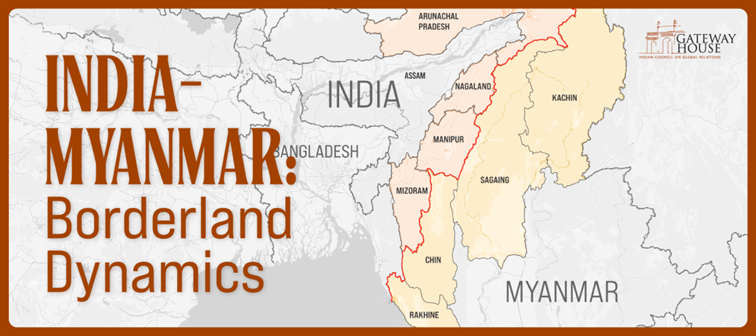
1. Geography of the India-Myanmar Border
- Total Length: Approximately 1,643 km.
- Bordering States: Four Indian states share a border with Myanmar:
- Arunachal Pradesh
- Nagaland
- Manipur
- Mizoram
- River: The Tiau River (or Tyao) and the Kaladan River (known as Chhimtuipui in India) are the primary rivers forming part of the 1,643-km international border between India and Myanmar.
- Fencing Status: Currently, the border is largely unfenced. Out of the 1,643 km, only about 43.75 km of fencing has been completed so far.
2. The Free Movement Regime (FMR)
- Definition: A unique institutional arrangement between India and Myanmar that allowed tribes living along the border to travel into each other’s territory without a visa.
- Historical Context: People on both sides share deep ethnic, social, and cultural ties.
- Recent Changes: In February 2024, the Union Home Ministry announced the scrapping of the FMR to check illegal migration and insurgent activities.
- Prior to being scrapped, it was restricted to 10 km from the border (reduced from the original 16 km).
- Movement is now regulated through designated gates requiring biometrics and gate passes.
3. Security and Agencies Involved
- National Investigation Agency (NIA): The primary agency investigating the illegal crossing and the importation of drones from Europe to Myanmar via India.
- Assam Rifles: (Note: While not explicitly named in the snippet, they are the primary “Border Guarding Force” for the Myanmar border).
- Security Challenges:EAGs (Ethnically Armed Groups): Insurgent groups active in Myanmar that sometimes use Indian territory for transit or logistics.
- Counter-Drone Mechanism: A joint mechanism with monthly reporting has been instituted to monitor the use of drones by insurgents.
- Trafficking and Migration: The unfenced nature of the border facilitates illegal human trafficking and migration.
4. Key Infrastructure and Technology
- Smart Fencing: The project includes the installation of gates that record biometrics and photographs of individuals crossing the border.
- Challenges in Construction: The fencing project has faced resistance from local communities and coordination challenges with the Myanmar Army and security agencies.
- Functional Gates: Out of 43 proposed entry/exit gates, the number has declined to 38, with only 20 currently functional.
Consider the following statements regarding the India–Myanmar border:

1. The India–Myanmar border is approximately 1,643 km long and fully fenced.

2. The Free Movement Regime (FMR) allowed border tribes to cross without visas but was scrapped in 2024.

3. The National Investigation Agency is investigating illegal cross-border activities involving drones.

4. Assam Rifles is the primary force guarding the India–Myanmar border.

Which of the statements given above are correct?
(a) 1 and 2 only
(b) 2, 3 and 4 only
(c) 1, 3 and 4 only
(d) 2 and 4 only

Answer: B

Explanation:
•  Statement 1 is incorrect: While the India–Myanmar border is indeed approximately 1,643 km long, it is not fully fenced. In fact, as of early 2024, only about 43 km of the total length has been fenced, with the government recently approving plans to fence the remaining stretch to check illegal migration and insurgent activities.
•  Statement 2 is correct: The Free Movement Regime (FMR) was a unique arrangement that allowed tribes living within 16 km of the border on either side to cross without a visa. However, due to security concerns, the Union Home Ministry announced the scrapping of the FMR in February 2024.
•  Statement 3 is correct: The National Investigation Agency (NIA) is actively investigating cases involving foreign nationals and the illegal importation/use of drones by ethnically armed groups (EAGs) across the Myanmar border.
•  Statement 4 is correct: The Assam Rifles is the oldest paramilitary force in India and is the designated "Border Guarding Force" specifically for the India–Myanmar border.