
Important for GS Prelims: Geography
About
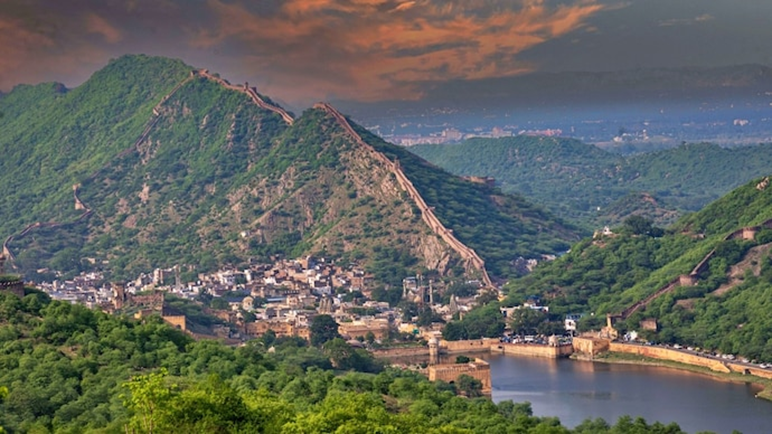
The Aravalli Hills are among the world’s oldest fold mountain ranges, extending about 700 km from Gujarat to Delhi. They play a crucial role in maintaining ecological balance, groundwater recharge, and preventing the eastward expansion of the Thar Desert.
Overview:
- Length: Approximately 692 km.
- Orientation: Southwest to Northeast.
- States Covered: Gujarat, Rajasthan, Haryana, Delhi (Delhi Ridge is its northern extension)
- Highest Peak: Guru Shikhar (1,722 m) in the Mount Abu region of Rajasthan.
- The Aravalli Range is one of the oldest fold mountain ranges in the world and the oldest fold mountain range in India.
- It was formed during the Precambrian (Proterozoic) Era, making it over 1 billion years old.
- It is a residual (relict) mountain range, extensively worn down by erosion over geological time.
- Major Passes: Desuri Pass, Haldighati Pass, Dewair (Diver) Pass.
- Rivers Originating from Aravallis: Banas (tributary of Chambal), Luni (largest west-flowing river of Rajasthan), Sabarmati, Sahibi River.
- The Aravalli region is rich in: Copper, Zinc, Lead, Marble, Granite, Limestone.
Ecological Importance
- Acts as a natural barrier against the eastward expansion of the Thar Desert.
- Facilitates groundwater recharge.
- Influences the local climate of north-western India.
- Supports diverse flora and fauna.
- Serves as an important wildlife corridor, especially for leopards and other mammals.
Important Protected Areas
- Sariska Tiger Reserve (Rajasthan)
- Mount Abu Wildlife Sanctuary
- Jhalana Leopard Reserve (Jaipur)
Conclusion
The Aravalli Hills are a geologically ancient mountain system whose ecological significance, mineral wealth, and role in maintaining environmental stability make them one of India’s most important physiographic features.
| This concept has been elaborately discussed in the following article: Aravalli Panel: Environmentalists Flag Digital Bias Against Rural Communities |