
After Reading This Article You Can Solve this UPSC Mains PYQ (2023)
‘The expansion and strengthening of NATO and a stronger US-Europe strategic partnership works well for India.’ What is your opinion about this statement? Give reasons and examples to support your answer. [15 marks] (GS-2 International Relation)
Context
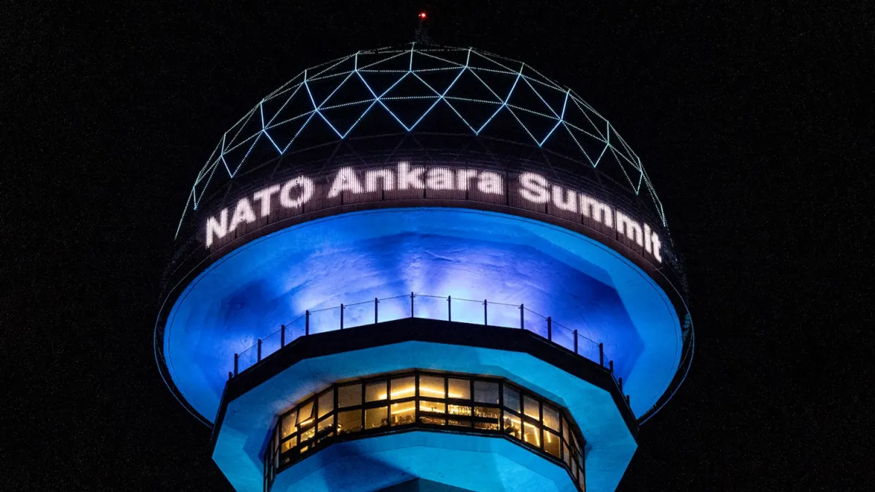
The 32 NATO member nations convened at the Ankara Summit (July 7–8, 2026) to operationalize commitments from the 2025 Hague Summit. The primary focus was on enforcing collective defense, achieving a 5% GDP defense spending target, and scaling industrial capacity amidst complex global security challenges.
Introduction
The 2026 Ankara Summit marks a strategic transition for NATO, shifting its focus from political discourse to tangible military readiness and industrial expansion. This reorientation reflects the alliance’s response to an increasingly volatile security environment and heightened superpower competition.
Key Dimensions and Structural Challenges in NATO’s Strategic Pivot
1. Unprecedented Financial Commitments and Collective Defense
- Reaffirming Article 5: The 32 allies endorsed an ironclad commitment to collective defense under Article 5 of the Washington Treaty and the preservation of the transatlantic bond.
- The Hague Defence Commitment: Allies unanimously backed a benchmark to allocate at least 5% of their respective Gross Domestic Products (GDPs) to defense by 2035—a significant hike over the historic 2% target.
- Shift from declaration to execution: The summit focused heavily on transforming political promises into tangible military capability through sustained investment, industrial scaling, and innovation.
2. Bottlenecks in the European Defence Industrial Base (DIB)
- Severe production deficits: European defense majors like MBDA and Rheinmetall have warned of systemic shortages in conventional ammunition and critical military hardware.
- Exposed strategic mismatches: High-intensity engagements, such as the conflict in Ukraine and US operations in the Middle East, have highlighted critical shortages in air defense interceptors, precision-guided munitions, and artillery rockets.
- Lack of alliance-wide coordination: Despite capable individual defense industries across Europe, the lack of synchronized procurement priorities across the 32 member states continues to fragment manufacturing output.
3. Deepening Structural Dependence on the United States
- Escalating import share: Nearly 50% of Europe’s defense spending between 2022 and 2024 went toward US suppliers, up from 28% in 2019–2021.
- Surge in Foreign Military Sales (FMS): US FMS notifications for European customers quadrupled since 2008, reaching $76 billion in 2024.
- Risk to strategic autonomy: Without a self-sustaining domestic defense industry, increased European spending risks deepening long-term technological and logistical dependency on Washington.
4. Shift in Global Arms Market Dynamics
- Transition to a seller’s market: As NATO members massively scale up procurement, the global arms bazaar is shifting inexorably from a buyer’s market to a seller’s market.
- Resource diversion and supply delays: Global suppliers are prioritizing NATO replenishment orders, leading to extended delivery timelines for non-aligned nations.
- Strained Western stockpiles: High consumption rates in concurrent conflicts are depleting precision weapon inventories faster than the current global defense manufacturing base can replace them.
5. Strategic Fallout for Developing Defense Economies and India
- Supply chain disruptions: Rising NATO demand is directly causing procurement delays for non-aligned nations, exemplified by delays in foreign supply of critical fighter jet engines for indigenous programs like the Tejas LCA.
- Escalating acquisition costs: Competition for key components, raw materials, and high-tech defense sub-assemblies is driving up global defense procurement budgets.
- Imperative for indigenous self-reliance: Vulnerabilities in global supply chains emphasize that critical security needs cannot rely on overstretched foreign suppliers who face their own domestic compulsions.
Strategic Frameworks & Comparative Models
- Licensed Co-Production Models (e.g., Patriot Systems in Ukraine): NATO’s initiative to permit localized production of advanced equipment under license offers a model for rapid technology transfer and capacity building.
- Unified Joint Procurement (EU Defense Mechanisms): Emerging efforts to pool defense orders across European states seek to eliminate duplicate R&D spending and reduce unit costs.
- Aatmanirbhar Bharat Framework (India): India’s push for indigenization through Positive Indigenization Lists, Defense Industrial Corridors, and private sector integration acts as a counter-strategy against international supply chain chokepoints.
Way Forward
- Accelerate Domestic Indigenization (Aatmanirbhar Bharat): India must rapidly advance its indigenous manufacturing capabilities across critical defense sectors to insulate its military modernization from global supply chain shocks.
- Focus on Emerging and Disruptive Technologies (EDTs): Prioritize national R&D investments in new-age defense domains, including Artificial Intelligence, autonomous systems, cyber warfare, quantum technologies, and resilient communication networks.
- Diversify Strategic Defense Partnerships: Cultivate multi-aligned defense manufacturing joint ventures and technology transfers to avoid critical single-source supply dependencies.
- Strengthen Public-Private Defense Collaboration: Foster deeper integration between defense public sector undertakings (DPSUs), private defense firms, and MSMEs to scale domestic production capacity rapidly.
- Institutionalize Co-Development and Local Production: Require foreign OEMs (Original Equipment Manufacturers) engaging in domestic defense contracts to establish long-term maintenance, repair, overhaul (MRO), and localized production facilities within India.
Conclusion
The 2026 Ankara Summit signals NATO’s definitive shift towards sustained military preparedness and industrial scaling. While strengthening European deterrence, it inadvertently strains global arms supply chains. Consequently, India must prioritize building a self-reliant defense industrial base to secure its strategic autonomy.
| Important CTC From This Article For UPSC:- 1. NATO 2. Baltic Country |
.