
Important for UPSC Geography
Introduction
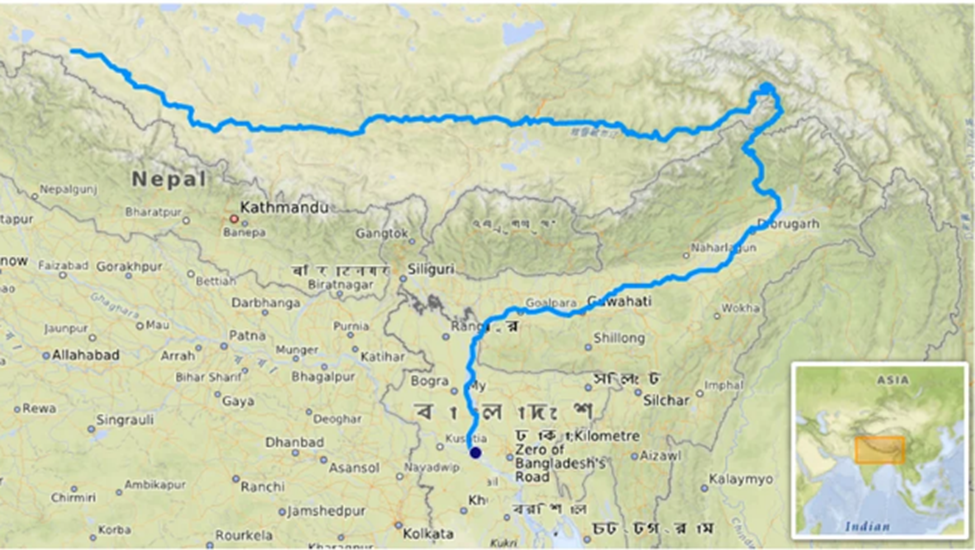
The Brahmaputra River is one of the largest, youngest, and most dynamic transboundary river systems in the world. Originating in the Tibetan Plateau, it traverses China, India, and Bangladesh before draining into the Bay of Bengal. It is the lifeline of Northeast India, supporting agriculture, biodiversity, inland navigation, hydropower, and livelihoods, while also posing challenges such as floods, erosion, and geopolitical concerns.
Key Facts (UPSC Prelims & Mains)
| Feature | Details |
| Origin | Chemayungdung Glacier (Angsi Glacier), Tibet |
| Source River Name | Yarlung Tsangpo |
| Indian Entry | Gelling, Arunachal Pradesh |
| Name in Arunachal Pradesh | Siang (Dihang) |
| Name in Assam | Brahmaputra |
| Name in Bangladesh | Jamuna |
| Total Length | ~2,900 km |
| Length in India | ~916 km |
| Outfall | Bay of Bengal (through Meghna Estuary) |
| Basin Countries | China, India, Bhutan, Bangladesh |
| Major Indian States | Arunachal Pradesh, Assam |
Major Tributaries
- Left Bank Tributaries are Dibang, Lohit, Burhi Dihing, Dhansiri, Kopili
- Right Bank Tributaries are Subansiri, Kameng (Jia Bharali),Manas, Sankosh, Beki
Ecological Importance
1. Wetlands
Supports numerous wetlands including:
- Deepor Beel (Ramsar Site)
- Maguri Beel
2. Biodiversity
Supports globally significant ecosystems:
- Kaziranga National Park
- Orang National Park
- Dibru-Saikhowa National Park
- Pobitora Wildlife Sanctuary
3. Keystone Species
- Gangetic River Dolphin
- One-Horned Rhinoceros
- Bengal Florican
- Migratory birds
4. Majuli Island
- World’s largest inhabited river island.
- Centre of Vaishnavite culture established by Srimanta Sankardeva.
- Threatened by riverbank erosion.
Conclusion
- The Brahmaputra River is not merely a river but the ecological, economic, and cultural lifeline of Northeast India.
- Sustainable management through Integrated River Basin Management, ecosystem restoration, climate-resilient infrastructure, and regional cooperation is essential to ensure that the Brahmaputra continues to support both development and ecological security, in line with India’s goals of disaster resilience and sustainable development.
| This concept has been elaborately covered in the article: Assam’s Flood Crisis: Climate Change, Ecological Vulnerability and Disaster Governance |