
Important for GS Prelims: Economy
Overview
- RBI is the Central Bank of India.
- Established on 1 April 1935 under the Reserve Bank of India Act, 1934.
- Nationalised: 1 January 1949.
- Headquarters: Mumbai (initially established in Kolkata, shifted to Mumbai in 1937).
Objectives
- Maintain monetary stability.
- Maintain price stability while supporting economic growth.
- Regulate the currency and credit system of the country.
Major Functions
- Monetary Authority
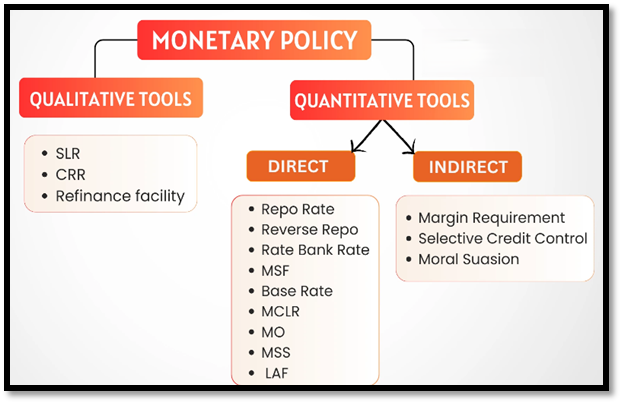
- Formulates and implements the Monetary Policy.
- Controls inflation and liquidity in the economy.
- Issuer of Currency
- Sole authority to issue banknotes (except ₹1 note).
- Coins are minted by the Government of India.
- Banker to the Government
- Maintains government accounts.
- Manages public debt and government borrowing.
- Banker to Banks
- Maintains Cash Reserve Ratio (CRR) accounts.
- Acts as Lender of Last Resort.
- Regulator and Supervisor
- Regulates commercial banks, cooperative banks, NBFCs and payment systems.
- Foreign Exchange Manager
- Manages India’s foreign exchange reserves.
- Implements the Foreign Exchange Management Act (FEMA), 1999.
- Payment and Settlement System
- Regulates digital payment systems such as RTGS, NEFT and UPI.
- Developmental Role
- Promotes financial inclusion and strengthens the financial system.
Monetary Policy Committee (MPC)
- Constituted under the RBI Act, 1934 (amended in 2016).
- Members: 6
- RBI Governor (Chairperson)
- Deputy Governor (Monetary Policy)
- One RBI officer
- Three members appointed by the Central Government
- Inflation Target: 4% CPI with a tolerance band of ±2% (2%–6%).
Conclusion
- The RBI is the apex monetary authority responsible for maintaining price stability, financial stability, and an efficient banking and payment system in India.
| This concept has been elaborately discussed in the following article: RBI Reaffirms Inflation Control as Top Priority |