
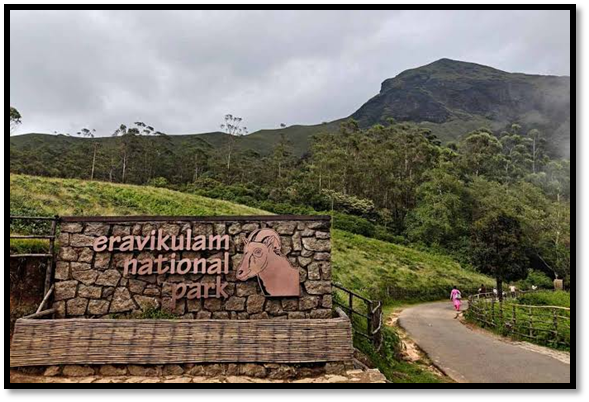
About
- Location: Situated along the high ranges (Kannan Devan Hills) of the southern Western Ghats in the Idukki and Ernakulam districts of Kerala.
- Originally established as a wildlife sanctuary in 1975 to protect the Nilgiri Tahr, it was upgraded to a National Park in 1978.
- The park forms part of the Western Ghats UNESCO World Heritage property, which was inscribed in 2012 under criteria (ix) and (x).
- Anamudi (2,695 m), the highest peak in South India and the Western Ghats, lies within the park.
Flora & Unique Vegetation
- Grassland-Shola Mosaic: A mix of stunted evergreen shola forests in valley folds and expansive, frost-resistant montane grasslands on hill slopes.
- Neelakurinji: Famous for mass flowering cycles that occur once every 12 years, turning the hillsides completely blue (last major bloom occurred in 2018, with the next cycle anticipated around 2030).
Fauna & Conservation Highlights
- Flagship Species: Houses the largest surviving wild population of the Nilgiri Tahr (Nilgiritragus hylocrius), an endangered mountain ungulate endemic to the Western Ghats.
- Other Wildlife: Supports diverse endemic fauna including the Nilgiri Marten, Small-clawed Otter, Indian Muntjac, Leopard, and Golden Jackal, alongside avian species like the Nilgiri Pipit.
- Management: The park remains completely closed to tourists during the annual calving season of the Nilgiri Tahr (typically between February and April).
Conclusion
- Eravikulam National Park in Kerala is a high-altitude Shola–grassland ecosystem of the Western Ghats, famous for the Nilgiri Tahr, Neelakurinji and Anamudi Peak.
| This concept has been elaborately discussed in the following article- The Twelve Year Bloom of Neelakurinji |