
About
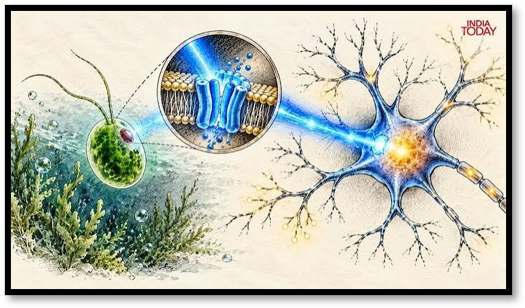
- Optogenetics: Combines genetic engineering and light-sensitive proteins called opsins to activate or inhibit specific neurons.
- Disease Research: Helps investigate neural circuit changes in Parkinson’s disease, Alzheimer’s disease, depression and schizophrenia.
- Therapeutic Potential: Supports research into potential treatments for neurological and psychiatric disorders.
How Does Optogenetics Work?
- Gene Introduction: Opsin genes are introduced into selected neurons.
- Protein Expression: Neurons produce light-sensitive opsins on their membranes.
- Light Stimulation: Light activates opsins, altering ion movement across cell membranes.
- Neural Control: Electrical activity changes, allowing neurons to be activated or inhibited.
Conclusion
- Optogenetics uses genetically introduced light-sensitive proteins to control specific neurons with light, making it a powerful tool for understanding the functioning of the brain.
| This concept has been elaborately discussed in the following article – Nobel Prize 2026 and the Breakthrough in Optogenetics |