
Context
- The Central Board of Secondary Education (CBSE) has announced the inclusion of the Maithili language in its curriculum from Class 1 up to the secondary level, starting from the next academic session. Bihar Chief Minister Samrat Choudhary hailed the move as a historic step for the linguistic and cultural preservation of the Mithilanchal region.
1. Key Regional Details
- Geographical Spread: Mithila or Mithilanchal is a cultural region spread across northern Bihar (comprising districts like Darbhanga, Madhubani, Sitamarhi, among others) and extended into parts of neighboring Nepal.
- Cultural Significance: The region is historically identified as the birthplace of Goddess Sita.
2. Basics of Maithili Language
- Language Family: Maithili belongs to the Indo-Aryan language family.
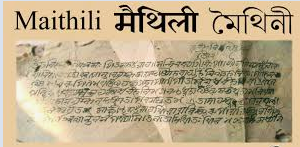
- Script: Historically, it was written in its native script called Tirhuta or Mithilakshara (which has similarities to Bengali and Assamese scripts) and Kaithi. However, in modern times, it is predominantly written in the Devanagari script.
- Official Recognition: It is one of the 22 officially recognized languages of India listed under the Eighth Schedule of the Constitution. It is also an official secondary language in the state of Jharkhand.
3. Constitutional Status of Languages in India
- Part XVII of the Indian Constitution deals with the Official Languages under Articles 343 to 351.
· The Eighth Schedule: Originally: The Constitution featured 14 languages in the schedule. Currently: There are 22 recognized languages.
4. Landmark Constitutional Amendments for Official Languages
| Amendment Act | Year | Language(s) Added |
| 21st Constitutional Amendment Act | 1967 | Sindhi |
| 71st Constitutional Amendment Act | 1992 | Konkani, Manipuri, and Nepali (Mnemonic: KMN) |
| 92nd Constitutional Amendment Act | 2003 | Bodo, Dogri, Maithili, and Santhali (Mnemonic: BDMS) |
Note: Odia was renamed from “Oriya” by the 96th Constitutional Amendment Act, 2011.
5. Other Crucial Constitutional Provisions for Languages
- Article 29: Protects the interests of minorities, stating that any section of citizens with a “distinct language, script or culture” has the right to conserve it.
- Article 343(1): Declares Hindi in Devanagari script as the official language of the Union.
- Article 350A (Facilities for instruction in mother-tongue at primary stage): Directs every state to provide adequate facilities for instruction in the mother-tongue at the primary stage of education to children belonging to linguistic minority groups.
- Article 351 (Directive for development of the Hindi language): Directs the Union to promote the spread and development of the Hindi language so that it may serve as a medium of expression for all components of the composite culture of India.
With reference to Maithili language and constitutional provisions related to languages in India, consider the following statements:
1. Maithili was added to the Eighth Schedule of the Constitution by the 92nd Constitutional Amendment Act, 2003.
2. Article 350A directs states to provide facilities for instruction in the mother tongue at the primary stage for linguistic minorities.
Which of the statements given above is/are correct?
(a) 1 only
(b) 2 only
(c) Both 1 and 2
(d) Neither 1 nor 2
Answer: (c) Both 1 and 2
Explanation:
• Statement 1 is correct because Maithili was added along with Bodo, Dogri, and Santhali through the 92nd Constitutional Amendment Act, 2003.
• Statement 2 is correct because Article 350A provides for mother-tongue instruction facilities for children belonging to linguistic minority groups.