
Context
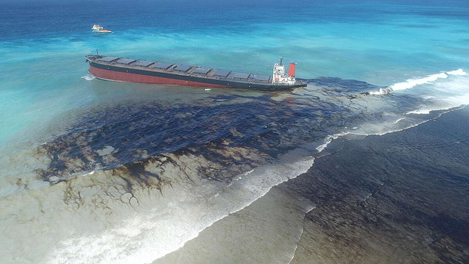
Recently, the draft Oil Spill Contingency Plan (OSCP) for Kerala highlighted that oil spills are no longer just accidental leaks but complex environmental disasters involving diverse pollutants like nurdles and hazardous chemicals.
What are Oil Spills?
An oil spill is the release of a liquid petroleum hydrocarbon into the environment, especially the marine ecosystem, due to human activity. It is a form of pollution that involves different types of oil, including crude oil, refined petroleum products (such as gasoline or diesel), or oily refuse.
Primary Causes
- Accidental Discharges: Shipwrecks (e.g., MSC Elsa 3), tanker accidents, or pipeline ruptures.
- Operational Discharges: Illegal tank cleaning by ships at sea or runoff from land-based industries.
- Blowing Out: Uncontrolled release from offshore oil and gas wells during drilling.
Behavior of Oil in Water (The “Weathering” Process)
When oil spills into the ocean, it undergoes a series of physical and chemical changes known as weathering. This is a critical concept for UPSC Geography and Environment:
- Spreading: Oil initially spreads as a thin film called an oil slick.
- Evaporation: Light components of the oil evaporate into the atmosphere within hours.
- Emulsification: The mixing of water into the oil, often creating a thick, mayonnaise-like substance called “mousse,” which is much harder to clean.
- Biodegradation: Microorganisms in the ocean naturally break down some oil components, though this is a very slow process.
- Sedimentation: Heavier components of oil sink to the seafloor, affecting benthic (bottom-dwelling) organisms.
Ecological and Socio-Economic Impacts
- Hypoxia: The oil slick blocks sunlight and prevents oxygen exchange between the air and water, leading to “dead zones.”
- Hypothermia in Wildlife: Oil destroys the insulating ability of fur-bearing mammals (like sea otters) and the water-repellency of a bird’s feathers, causing them to die of cold.
- Toxicity: Ingesting oil causes kidney and liver damage in fish and marine mammals.
- Livelihood: Contamination of fish stocks leads to a collapse in the local fishing economy and tourism.
National Oil Spill Disaster Contingency Plan (NOS-DCP)
- Origin: Originally promulgated in 1996 and periodically updated (the latest major revision being in 2024).
- Mandate: It provides a proactive institutional framework for responding to oil and Hazardous and Noxious Substances (HNS) spills in Indian waters.
- Tiers of Response:
- Tier 1 (Small): Handled by the individual port, oil company, or facility (up to 700 tonnes).
- Tier 2 (Medium): Handled at the regional/district level with state assistance (700 to 10,000 tonnes).
- Tier 3 (Large): National-level emergency handled by the Indian Coast Guard (>10,000 tonnes).
Role of the Indian Coast Guard (ICG)
- The ICG is the Central Coordinating Authority for combating marine pollution in India’s Exclusive Economic Zone (EEZ).
- It functions under the Ministry of Defence.
- The ICG maintains dedicated Pollution Response Vessels (PRVs) and stockpiles of equipment (like booms and skimmers) at major centers like Mumbai, Chennai, and Port Blair.
Q. In the context of marine pollution, the term "Mousse" refers to:
a) A type of biological algae that thrives after an oil spill.
b) A thick, stable emulsion of water-in-oil formed during the weathering process.
c) The light, gaseous components of petroleum that evaporate immediately.
d) A specialized mechanical tool used by the Coast Guard to scoop oil.
Answer: b) A thick, stable emulsion of water-in-oil formed during the weathering process.
Solution:
Option b is Correct: During the weathering of an oil spill, the physical action of waves can mix water into the oil, creating a stable water-in-oil emulsion popularly known as "mousse." This substance can contain up to 70% water and is significantly more voluminous and difficult to treat than the original oil.