
Important for GS prelims International Relation
Introduction
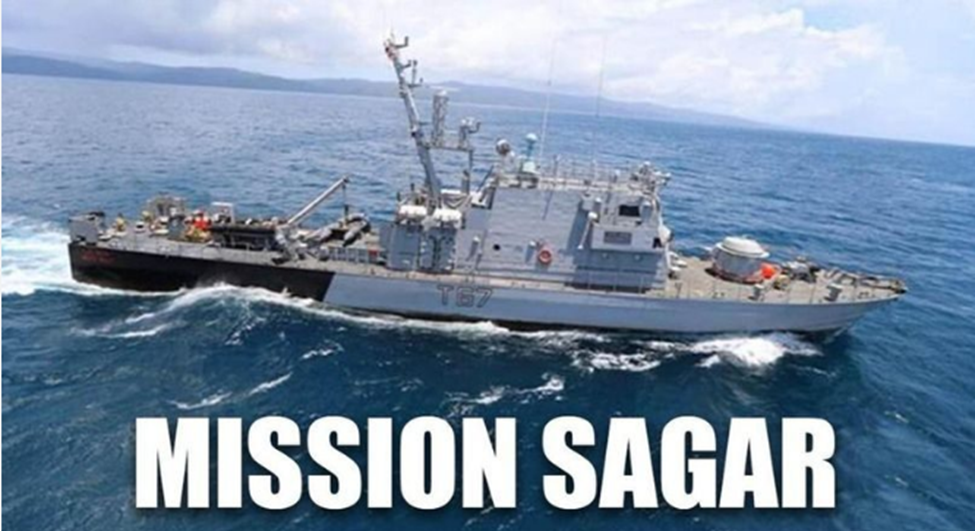
SAGAR (Security and Growth for All in the Region) is India’s maritime vision unveiled by Prime Minister Narendra Modi in March 2015 during his visit to Mauritius. It serves as the cornerstone of India’s Indian Ocean Region (IOR) and Indo-Pacific policy, emphasizing collective maritime security, economic cooperation, sustainable development, and regional prosperity.
Objectives of SAGAR
- Ensure maritime security and stability in the Indian Ocean Region.
- Promote collective growth and prosperity among littoral states.
- Safeguard Sea Lines of Communication (SLOCs) and freedom of navigation.
- Strengthen regional cooperation against traditional and non-traditional maritime threats.
- Enhance Humanitarian Assistance and Disaster Relief (HADR) capabilities.
- Promote the Blue Economy through sustainable utilization of marine resources.
- Build maritime capacity of partner countries through training, defence cooperation, and infrastructure development.
Key Pillars of SAGAR
1. Maritime Security
- Combat piracy, maritime terrorism, trafficking, and Illegal, Unreported and Unregulated (IUU) fishing.
- Enhance coastal security and Maritime Domain Awareness (MDA).
2. Regional Cooperation
- Strengthen partnerships through BIMSTEC, IORA, Colombo Security Conclave, and ASEAN.
3. Blue Economy
- Encourage sustainable fisheries, marine biodiversity conservation, offshore renewable energy, and ocean-based economic development.
4. Disaster Management
- Improve regional preparedness through HADR operations, early warning systems, and coordinated disaster response.
Strategic Significance
- Strengthens India’s role as a Net Security Provider in the Indian Ocean.
- Supports the Act East Policy and India’s broader Indo-Pacific Vision.
- Counters strategic challenges posed by China’s expanding maritime presence.
- Enhances connectivity, trade, and energy security through secure SLOCs.
- Reinforces a rules-based international order in accordance with UNCLOS.
- Promotes trust and stability among Indian Ocean littoral states.
Major Achievements
- Expansion of coastal radar networks and maritime surveillance cooperation.
- Effective HADR missions, including Operation Neer (Maldives), Operation Rahat (Yemen), and disaster relief after cyclones and tsunamis.
- Increased bilateral and multilateral naval exercises such as MILAN.
- Strengthened cooperation with island nations like Mauritius, Seychelles, Sri Lanka, and Maldives.
- Integration with initiatives such as the Indo-Pacific Oceans Initiative (IPOI) and MAHASAGAR.
Conclusion
- The SAGAR Initiative represents India’s comprehensive maritime vision that combines security, economic development, and regional cooperation.
- By fostering a free, open, inclusive, and secure Indian Ocean Region, SAGAR strengthens India’s strategic role in the Indo-Pacific while promoting sustainable growth, maritime resilience, and collective prosperity.
| This concept has been elaborately discussed under this article The Bay of Bengal as India’s SHANTI Anchor: A New Maritime Governance Architecture for the Indo-Pacific. |