
Context
Recently, the Bargi Dam in Jabalpur, Madhya Pradesh, has drawn significant national attention following a tragic cruise boat accident that resulted in nine fatalities. Reports indicate that a sudden storm caused the “Narmada Queen” cruise to capsize, leading the Madhya Pradesh government to order a high-level inquiry into safety protocol lapses. This incident has reignited discussions regarding disaster management, the implementation of the Dam Safety Act 2021, and the regulation of eco-tourism activities in large reservoirs.
1. Geographical Location and Structure
- River: The dam is constructed across the Narmada River, which is the fifth-largest river in India and the largest west-flowing river.
- Location: It is situated in the Jabalpur district of Madhya Pradesh.
- Type: It is a massive gravity dam made of earth and masonry.
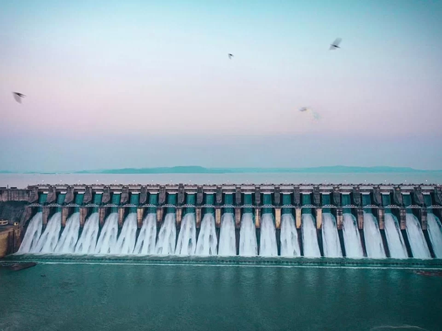
- Gates: The structure features 21 spillway gates designed to regulate the massive water flow of the Narmada during the monsoon season.
2. Historical and Administrative Significance
- Narmada Valley Project: The Bargi Dam is one of the first major dams completed (in 1988) among the planned chain of 30 large dams under the Narmada Valley Development Project.
- Alternate Name: The project is officially named the Rani Avanti Bai Lodhi Sagar Project, honoring the 19th-century warrior queen of the Ramgarh kingdom.
- Management: It is managed by the Narmada Valley Development Authority (NVDA) and the Water Resources Department of Madhya Pradesh.
3. Key Multipurpose Features
The dam serves several critical functions for the regional economy:
- Irrigation: It supports two massive irrigation schemes—the Rani Avantibai Lodhi Sagar Project and the Bargi Diversion Project, which provide water to several districts, including Jabalpur, Katni, Rewa, and Satna.
- Hydropower: The dam has an installed capacity of 105 MW, generated through two 45 MW Francis turbines at the main dam and two 7.5 MW turbines on the canal side.
- Drinking Water: It is the primary source of drinking water for the city of Jabalpur and surrounding rural areas.
- Tourism: The reservoir, known as Bargi Lake, is a major eco-tourism hub offering cruises, water sports, and birdwatching opportunities.
4. Associated Ecological Pointers
- The backwaters of the dam have created a vast reservoir that attracts migratory birds such as the Sarus Crane.
- The surrounding region is part of the Narmada Rift Valley, situated between the Vindhya and Satpura mountain ranges.
| Major Dams on the Narmada River 1. Sardar Sarovar Dam (Gujarat) Significance: It is the largest and terminal dam on the Narmada River. It is a concrete gravity dam and is considered the second-largest concrete dam in the world (by volume) after the Grand Coulee Dam (USA). Beneficiary States: It is a multi-state project involving Gujarat, Madhya Pradesh, Maharashtra, and Rajasthan. Key Highlights: Supplies water to the arid regions of Saurashtra and Kutch through the Narmada Canal. Site of the Statue of Unity, located downstream at Kevadia. Associated with the historic Narmada Bachao Andolan led by Medha Patkar. 2. Indira Sagar Dam (Madhya Pradesh) Location: Khandwa district (Narmada Nagar, Punasa). Record: It holds the largest reservoir in India in terms of water storage capacity ($12.22$ billion cubic meters). Role: Acts as the “mother dam” for downstream projects like Omkareshwar and Maheshwar, regulating water flow to the Sardar Sarovar. 3. Omkareshwar Dam (Madhya Pradesh) Type: A concrete gravity dam. Unique Feature: Known for the Omkareshwar Floating Solar Project, which is one of the world’s largest floating solar plants. Cultural Link: Located near the Omkareshwar Jyotirlinga, one of the 12 sacred Jyotirlingas of Lord Shiva. 4. Maheshwar Dam (Madhya Pradesh) Location: Khargone district. Function: Primarily a hydroelectric project (400 MW). Note: It has faced significant hurdles regarding rehabilitation and environmental clearances. |
Q. Arrange the following dams on the Narmada River in the correct order from its source to its mouth:
1. Sardar Sarovar Dam
2. Bargi Dam
3. Indira Sagar Dam
4. Omkareshwar Dam
Select the correct code:
(a) 2 — 3 — 4 — 1
(b) 2 — 4 — 3 — 1
(c) 1 — 4 — 3 — 2
(c) 3 — 2 — 4 — 1

Solution: (a)
The Narmada flows from East to West.
Bargi (Jabalpur) is furthest East (upstream).
Indira Sagar (Khandwa) and Omkareshwar follow in central MP.
Sardar Sarovar (Gujarat) is the terminal dam furthest West (downstream).