
Context
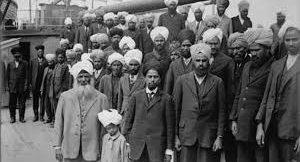
Recently, the Komagata Maru incident was mentioned by singer Diljit Dosanjh on The Tonight Show Starring Jimmy Fallon, highlighting the historical injustice and racial discrimination faced by Indian immigrants during the colonial era
I. Key Details of the Voyage
- The Ship: A Japanese steamship named Komagata Maru.
- The Organizer: Gurdit Singh, a Punjabi entrepreneur based in Singapore.
- The Passengers: 376 passengers in total, including 340 Sikhs, 24 Muslims, and 12 Hindus from Punjab.
- Timeline: The ship sailed from Hong Kong in the spring of 1914 and arrived at Vancouver’s Burrard Inlet on May 23, 1914.
II. Legal and Administrative Standoff
- Continuous Journey Regulation (1908): Barred anyone who had not travelled by a single unbroken journey from their country of birth to Canada. No direct shipping routes existed from India, making it practically impossible for South Asians to qualify.
- The Standoff: Canadian Prime Minister Robert Borden refused to let the ship dock, keeping it anchored offshore for two months.
- Local Support: The Shore Committee was a group formed in 1914 by Vancouver-based South Asian activists (mainly Sikhs, Hindus, and Muslims) to support the 376 passengers of the Japanese steamer Komagata Maru, who were denied entry into Canada due to discriminatory immigration policies. Led by figures like Hussain Rahim, Sohan Lal Pathak, and Balwant Singh, the committee raised $20,000 for food, water, and legal aid for passengers facing harsh conditions.
- Departure: The ship was forced to depart under escort on July 23, 1914, after Canadian officials withheld food and water and attempted to board the ship by force.
III. Return to India: The Budge Budge Riot
- Arrival at Calcutta: The ship anchored near Calcutta (Budge Budge) in late September 1914.
- The Confrontation: British authorities attempted to force passengers onto trains bound for Punjab.
- Casualties: In the ensuing clash, 20 passengers were killed by police fire, and many others were imprisoned.
- Gurdit Singh: He evaded capture for several years before surrendering in 1920.
IV. Link with the Ghadar Movement
The Komagata Maru incident was deeply intertwined with the Ghadar Movement, acting as a catalyst for its revolutionary activities.
- Ideological Infusion: Ghadar activists boarded the ship at Yokohama to deliver lectures and distribute anti-colonial literature among the passengers.
- Recruitment Surge: The brutal treatment of the passengers served as a recruitment tool, causing a surge in support for the Ghadar Party.
- Ghadar Revolution (1915): Many Ghadar members returned to Punjab in 1915 to attempt an armed uprising, inspired by the grievances highlighted by the voyage.
- Exposure of British Promises: The incident demonstrated to Indian subjects that the British Empire’s promise of equal status was a myth, fueling the demand for total independence.
The Shore Committee was constituted in 1914 in connection with which of the following incidents?
(a) Komagata Maru Incident
(b) Jallianwala Bagh Massacre
(c) Champaran Satyagraha
(d) Non-Cooperation Movement
Answer: A