
Context
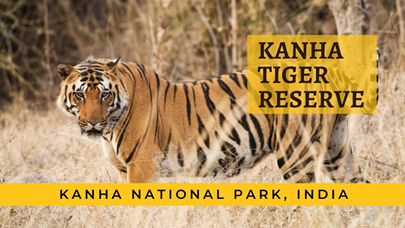
Recently, the Kanha Tiger Reserve (KTR) has been in the news following the tragic death of a tigress and her four cubs in the Sarhi range, which has prompted state wildlife officials to investigate a suspected outbreak of the Canine Distemper Virus (CDV). This incident is particularly significant as it adds to the rising tiger mortality in Madhya Pradesh in 2026 and has raised concerns regarding the presence of stray dogs within the reserve’s core areas, which act as primary carriers for the virus.
Key Features of Kanha Tiger Reserve
1. Location and Geography
- The reserve is situated in the Maikal range of the Satpura hills in the Mandla and Balaghat districts of Madhya Pradesh.
- It covers a core area of approximately 940 square kilometers, making it the largest national park in Central India.
- The landscape is characterized by a horseshoe shape and is divided into two major protected areas: Hallon and Banjar.
- The reserve serves as a critical link in the Kanha-Pench Corridor, which facilitates the movement of tigers between various protected areas in the central Indian landscape.
2. Flora and Vegetation
- The vegetation is a diverse mix of Sal (Shorea robusta) and other mixed deciduous forests.
- Large open grasslands, known as maidans (meadows), are scattered throughout the park and are essential for the survival of large herbivore populations.
- The highland areas feature tropical moist and dry deciduous forests, often interspersed with bamboo on the slopes.
3. Fauna and Conservation Success
- The Hard-ground Barasingha (Swamp Deer): Kanha is internationally famous for saving the endemic Cervus duvauceli branderi from the brink of extinction. It is the only place in the world where this specific subspecies exists in the wild.
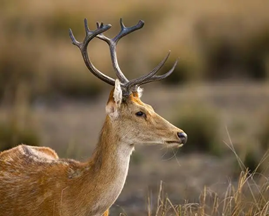
- Mascot: In 2017, Kanha became the first tiger reserve in India to introduce an official mascot, named “Bhoorsingh the Barasingha”.
- Major Species: Apart from the Bengal Tiger, the reserve hosts the Indian Leopard, Sloth Bear, Wild Dog (Dhole), Gaur (Indian Bison), and Sambar.
- Conservation Initiatives: The park is credited with the first successful reintroduction of orphaned tiger cubs into the wild and the translocation of Gaur to Bandhavgarh Tiger Reserve.
| Canine Distemper Virus (CDV) Viral Nature: It is a highly contagious disease caused by a paramyxovirus, which is closely related to the human measles virus.Multi-System Attack: The virus simultaneously targets the respiratory, gastrointestinal, and central nervous systems, making it exceptionally deadly.Transmission: It spreads primarily through aerosol droplets (coughing or sneezing) and direct contact with infected fluids like saliva or urine.The “Hard Pad” Symptom: A classic clinical sign is the thickening and hardening of an animal’s nose and footpads, often referred to as “Hard Pad Disease.”Wildlife Threat: While common in dogs, it is a major conservation threat to Apex predators like Tigers and Lions, as it can cause them to lose their natural fear of humans and succumb to seizures. |
Q. With reference to the Kanha Tiger Reserve, consider the following statements:
1. It is the only natural habitat in the world for the Hard-ground Barasingha (Cervus duvauceli branderi).
2. The reserve is geographically situated within the Vindhya Mountain Range.
3. Kanha was the first tiger reserve in India to officially introduce a mascot to promote conservation.
How many of the statements given above are correct?
A. Only one
B. Only two
C. All three
D. None
Solution:
Answer: B. Only two
• STATEMENT 1 IS CORRECT: Kanha Tiger Reserve is indeed the last world population and the only natural habitat for the specific subspecies of hard-ground Barasingha.
• STATEMENT 2 IS INCORRECT: The reserve is located in the Maikal range of the Satpuras, not the Vindhya Range.
• STATEMENT 3 IS CORRECT: It made history in India by being the first to introduce an official mascot, "Bhoorsingh the Barasingha," to create awareness.