
Context
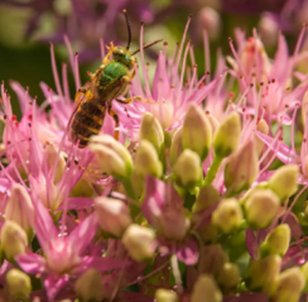
A collaborative experiment between the Khadi and Village Industries Board (KVIB) and the Central Bee Research Institute (CBRI), Pune, was conducted in Yercaud (Tamil Nadu). The study examined the symbiotic relationship between honey bee activity and coffee plantation productivity, demonstrating a significant increase in honey yields and potential bean quality.
1. The Experiment Design: Controlled Variables
To measure the impact of pollination, the research divided the plantation into three distinct sections:
- Self-Pollination Only: Coffee plants were enclosed to prevent access by bees or other natural pollinators.
- Natural Pollination: Plants were left open to all natural agents, including wild bees and wind.
- Maximized Bee Pollination: Plants were specifically surrounded by bee-hives to ensure a high frequency of bee-flower interaction.
2. Key Findings
- Honey Production: During the one-week blossoming period, honey production effectively doubled.
- Yield Metrics: Average honey yields from beehives placed near blossoming coffee reached approximately 3 kg to 4 kg per box, showing a marked increase compared to normal periods.
- Long-term Outlook: The study aims to evaluate the quantity and quality of coffee seeds (beans) nine months post-blossoming to confirm the benefits of cross-pollination.
3. Scientific Significance
- Cross-Pollination vs. Self-Pollination: While many coffee varieties (like Arabica) are self-fertile, cross-pollination by bees often leads to higher fruit set, heavier berries, and improved genetic vigor.
- Ecosystem Services: This experiment highlights the role of bees as providers of “regulating services” in an ecosystem, which has direct economic benefits for the agrarian economy.
- Institutional Roles:CBRI (Pune): A nodal agency for research in apiculture.
- The Khadi and Village Industries Commission (KVIC) is a statutory body established in April 1957 by an Act of Parliament (1956) under the Ministry of Micro, Small and Medium Enterprises (MSME)
4. Required Climate for Coffee
| Parameter | Requirement Details | Key Points |
| Climate | Tropical & Humid | Requires a hot and moist climate; sensitive to extreme weather. |
| Temperature | 15°C to 28°C | High day temperatures (above 30°C) and frost are both harmful. |
| Rainfall | 150 cm to 250 cm | Must be well-distributed. Needs “Blossom Showers” (March-April). |
| Soil Type | Deep, Well-drained Loamy Soil | Rich in Humus and organic matter; slightly acidic (pH 5.0–6.5). |
| Topography | Hilly Slopes (600m – 1600m) | Requires slopes to prevent waterlogging, which causes root rot. |
| Sunlight | Partial Shade | Often inter-cropped with shade trees (Silver Oak) to avoid direct sun. |
| Labor | Highly Intensive | Picking, drying, and grading are done manually; high female labor ratio. |
5. Production
- Traditional regions: Karnataka, Kerala, Tamil Nadu
- Non-traditional regions: Andhra Pradesh, Odisha
- North Eastern regions: Assam, Arunachal Pradesh, Manipur, Meghalaya, Mizoram, Nagaland, Tripura.
- Among these, Karnataka leads with a production of 2,80,275 metric tonnes (Post Blossom Estimate for 2025–26), followed by Kerala and Tamil Nadu.
With reference to the role of honey bees in coffee cultivation, consider the following statements:
1. Cross-pollination by bees can improve fruit set and berry quality in coffee plantations.
2. Coffee cultivation requires deep, well-drained loamy soil rich in humus.
3. Coffee plants grow best under direct and intense sunlight without shade trees.
4. The Khadi and Village Industries Commission (KVIC) is a statutory body under the Ministry of MSME.
Which of the statements given above are correct?
(a) 1, 2 and 4 only
(b) 1 and 3 only
(c) 2, 3 and 4 only
(d) 1, 2, 3 and 4
Answer: A
Explanation:
•  Statement 1 is correct: As highlighted in the experiment by CBRI and KVIB, cross-pollination by honey bees leads to better fruit set (the transition from flower to berry) and improved genetic vigor. Even in self-pollinating varieties like Arabica, bee activity often results in heavier and more uniform berries.
•  Statement 2 is correct: From a geographical perspective, coffee is a demanding crop. It requires deep, fertile, and well-drained loamy soil with a high organic (humus) content. It is typically grown on hill slopes to ensure water does not stagnate, which would otherwise lead to root rot.
•  Statement 3 is incorrect: Coffee plants are sensitive to direct, intense sunlight and high temperatures. In India, coffee is traditionally grown under a two-tier mixed shade canopy. Shade trees (like Silver Oak or Dalbergia) are essential to protect the plants from the midday sun and to maintain a cooler microclimate.
•  Statement 4 is correct: The Khadi and Village Industries Commission (KVIC) was established by an Act of Parliament in 1956. It is a statutory body functioning under the Ministry of Micro, Small and Medium Enterprises (MSME). It oversees the "Honey Mission" or the "Sweet Revolution" to promote apiculture as a supplementary income for farmers.