
Context
Recently, India’s strategic autonomy is facing a crucial test as the U.S. sanctions waiver for the Chabahar Port project expired on Sunday. The Ministry of External Affairs is currently in high-level discussions with both Iran and the United States to navigate the fallout. With Washington unlikely to grant another extension amidst ongoing regional conflicts, New Delhi is exploring alternative options, including the potential transfer of its stake in the Shahid Beheshti Terminal to an Iranian entity to shield Indian operations from secondary sanctions while maintaining long-term project viability.
1. Chabahar Port: Strategic Dimensions
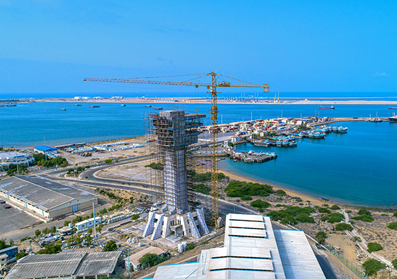
- Location: Situated in the Sistan-Balochistan province on Iran’s southern coast, it lies on the Gulf of Oman.
- Key Terminals: It consists of two main terminals: Shahid Beheshti (developed by India) and Shahid Kalantari.
- India’s Role: India operates the Shahid Beheshti terminal through India Ports Global Limited (IPGL) under a long-term 10-year agreement signed in May 2024.
- The Pakistan Bypass: It provides India with a direct maritime route to Afghanistan and Central Asia, effectively bypassing the land-access restrictions imposed by Pakistan.
- Proximity to Gwadar: It is located approximately 170 km west of Pakistan’s Gwadar Port, which is being developed by China, making it a crucial geopolitical counterweight.
2. International North-South Transport Corridor (INSTC)
- Concept: A 7,200-km-long multi-modal network of ship, rail, and road routes for moving freight between India, Iran, Azerbaijan, Russia, Central Asia, and Europe.
- Founding Members: Established in September 2000 by India, Russia, and Iran.
- Expanded Membership: Now includes 13 countries, such as Azerbaijan, Armenia, Kazakhstan, Kyrgyzstan, Tajikistan, Turkey, Ukraine, Belarus, Oman, and Syria (Bulgaria is an observer).
- The Main Route:
- Sea Link: From Mumbai (India) to Bandar Abbas or Chabahar (Iran).
- Land Link: Via road/rail across Iran to Bandar-e-Anzali (Caspian Sea port).
- Sea Link: Across the Caspian Sea to Astrakhan (Russia).
- Rail Link: To Moscow and Northern Europe.
3. Comparative Advantage: INSTC vs. Suez Canal
| Feature | Suez Canal Route | INSTC Route |
| Distance | Approximately 16,000 km | Approximately 7,200 km |
| Transit Time | 40–45 Days | 20–25 Days |
| Freight Cost | Standard | 30% reduction |
| Time Saved | Baseline | 40% faster |
Q1. Consider the following statements regarding the International North-South Transport Corridor (INSTC):
1. It is a multimodal transport network that aims to connect the Indian Ocean and the Persian Gulf to the Caspian Sea and Northern Europe.
2. Turkmenistan and Uzbekistan were the original founding members along with India and Russia.
3. The corridor aims to reduce the transit time between Mumbai and Moscow by nearly half compared to the Suez Canal route.
How many of the statements given above are correct?
(a) Only one
(b) Only two
(c) All three
(d) None
Answer: (b) Only two
Solution:
• STATEMENT 1 IS CORRECT: The INSTC is a 7,200-km multi-modal corridor linking the Indian Ocean/Persian Gulf to the Caspian Sea and onwards to Russia and Europe.
• STATEMENT 2 IS INCORRECT: The original founding members (2000) were India, Russia, and Iran. While other Central Asian nations joined later, they were not the initial signatories.
• STATEMENT 3 IS CORRECT: Transit time via INSTC is estimated at 20–25 days, compared to the 40–45 days taken via the Suez Canal, representing a significant reduction (nearly 40-50%).