
Context
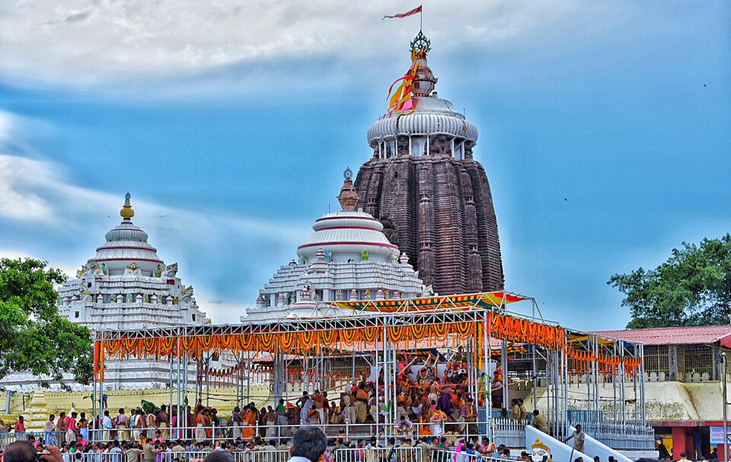
Recently, the Odisha High Court ordered an inventory of valuables stored in the Bhitara Ratna Bhandar (inner chamber) of the Shree Jagannath Temple, Puri — the first such exercise since 1978 (after 48 years). A team of goldsmiths, RBI representatives, and temple priests is conducting this exercise using 3D mapping and colour-coded categorization.
1. Historical and Architectural Context
- Temple Era: The Shree Jagannath Temple was constructed in the 12th century.
- Dynastic Link: It was commissioned by King Anantavarman Chodaganga Deva of the Eastern Ganga Dynasty.
- Architectural Style: It is a classic example of Kalinga Architecture, specifically the Rekha Deul (Sanctum with a curvilinear spire) style.
- Deities: The temple is dedicated to Lord Jagannath, Lord Balabhadra, and Goddess Subhadra. Unlike traditional stone idols, these are made of wood and are ritually replaced during the Nabakalebara ceremony.
- The Four Dhams: It is one of the four holiest pilgrimage sites (Char Dham) in Hinduism.
- Associated Bhakti Saints: Many great Vaishnava saints, such as Chaitanya Mahaprabhu, Ramanujacharya, Madhvacharya, Nimbarkacharya, Vallabhacharya and Ramananda were closely associated with the temple.
2. The Ratna Bhandar and Inventory Process
- Bhitara Ratna Bhandar: This is the inner chamber of the treasury used to store unused jewelry and ancient valuables of the temple.
- Supervision: The documentation is conducted by a team including goldsmiths, representatives of the Reserve Bank of India (RBI), and temple priests.
- Modern Technology: For the first time, 3D mapping is being used to document items, along with a systematic weighing and cataloging process.
- Color-Coding System: A specific system is used for storage—gold ornaments are wrapped in yellow velvet, while silver and precious stones are stored in white and red clothing.
3. Kalinga Temple Architecture: Key Features
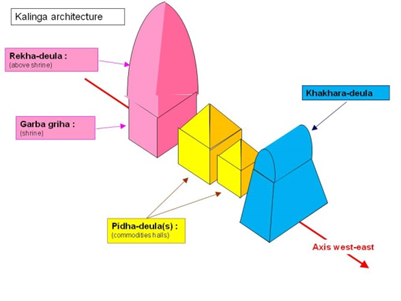
- Rekha Deula (Main Shrine): A tall, vertical, sugar-loaf-shaped building covering the sanctum sanctorum, designed to look like a mountain peak. Examples include the main spire of the Lingaraj and Konark Sun temples.
- Pidha Deula (Assembly Hall): A rectangular or square hall featuring a pyramid-shaped roof built with horizontal tiers (pidhas), typically used for the jagamohana (audience hall).
- Khakhra Deula (Shakti Temples): Rare rectangular structures with a barrel-vaulted roof (resembling a pumpkin or gourd), often dedicated to female deities like Shakti (e.g., Baitala Temple).
4. Important Festivals Associated with Jagannath Temple
| Festival | Significance |
| Rath Yatra | Annual chariot procession; deities taken out in three massive chariots — Nandighosa (Jagannath), Taladhwaja (Balabhadra), Darpadalana (Subhadra) |
| Snana Yatra | Bathing festival of the deities on Jyeshtha Purnima |
| Nabakalebara | Ritual replacement of wooden deities (Daru Brahma) — occurs once in 8, 12, or 19 years |
| Chandan Yatra | 42-day festival involving boat processions |
| Bahuda Yatra | Return chariot procession after Rath Yatra |
5. UNESCO and Heritage Status
- Jagannath Temple is part of the Puri Heritage Corridor project
- Puri is being developed as a heritage smart city
- The Konark Sun Temple (also in Odisha, Eastern Ganga dynasty) is a UNESCO World Heritage Site
- The three major temples of Odisha — Jagannath (Puri), Lingaraj (Bhubaneswar), and Konark (Sun Temple) — represent the pinnacle of Kalinga architecture
With reference to the religious significance of the Jagannath Temple, consider the following statements:
1.It is one of the Char Dham pilgrimage sites.
2.It is associated with several Bhakti saints like Chaitanya Mahaprabhu.

Which of the statements given above is/are correct?
(a) 1 only
(b) 2 only
(c) Both 1 and 2
(d) Neither 1 nor 2

Answer: C

Explanation:
Statement 1 is Correct: The Shree Jagannath Temple in Puri is one of the four holiest pilgrimage sites in Hinduism, known as the Char Dham. The other three sites are Badrinath (North), Dwaraka (West), and Rameswaram (South). These sites were traditionally defined by the 8th-century philosopher and saint Adi Shankaracharya to unite the diverse geographic regions of India under a shared spiritual identity.
Statement 2 is Correct: The temple has deep roots in the Bhakti Movement. It is famously associated with Chaitanya Mahaprabhu, the 15th-century saint and founder of Gaudiya Vaishnavism, who spent the last 18 years of his life in Puri worshipping Lord Jagannath. Other prominent Bhakti figures associated with the temple include Ramanujacharya and Jayadeva (author of the Gita Govinda).