
Context
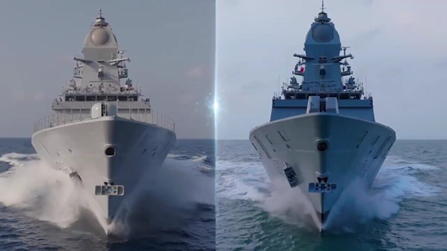
- Recently, the Indian Navy achieved a major milestone in maritime indigenization with the delivery of Mahendragiri, the sixth advanced stealth frigate under Project 17A, on April 30, 2026. This follow-on delivery, occurring just weeks after the induction of the fifth frigate, Dunagiri, highlights the accelerated pace of the Indian Navy’s modernization program.
- The delivery by Mazagon Dock Shipbuilders Limited (MDL) underscores India’s growing prowess in constructing sophisticated “blue-water” naval assets to counter emerging security challenges in the Indian Ocean Region.
1. Overview and Design
- Successor Project: Project 17A is a follow-on to the Project 17 Shivalik-class frigates. It features improved stealth features, advanced weapons, and sensors.
- Lead Designer: The ships are designed in-house by the Warship Design Bureau (WDB), formerly known as the Directorate of Naval Design.
- Integrated Construction: This project utilizes the “Integrated Construction” methodology, where blocks are pre-outfitted before being joined, significantly reducing the build period.
2. Stealth and Technology
- Radar Cross Section (RCS): The ships are designed with a reduced RCS, achieved through efficient hull shaping and the application of radar-absorbent materials, making them harder to detect by enemy radars.
- Integrated Platform Management System (IPMS): This state-of-the-art system centralizes the control and monitoring of the ship’s machinery and auxiliaries.
3. Weaponry and Propulsion
- Propulsion: The frigates use a Combined Diesel or Gas (CODOG) configuration. This includes two gas turbines for high-speed operations and two diesel engines for economical cruising.
- Potent Suite: They are equipped with BrahMos supersonic cruise missiles, MRSAM (Medium Range Surface-to-Air Missiles), and advanced sonar systems for anti-submarine warfare.
4. Indigenous Contribution
- Local Content: Approximately 75% of the project’s equipment and systems are sourced from indigenous vendors.
- MSME Involvement: Over 200 MSMEs across the country have contributed to the supply chain, generating thousands of direct and indirect jobs.
5. List of Project 17A Ships
A total of seven ships are being constructed under this project by two premier public sector shipyards:
| Ship Name | Manufacturer | Current Status (Approx.) |
| INS Nilgiri | MDL, Mumbai | Delivered/Commissioned |
| INS Himgiri | GRSE, Kolkata | Under Trials |
| INS Udaygiri | MDL, Mumbai | Delivered/Commissioned |
| INS Dunagiri | GRSE, Kolkata | Delivered (March 2026) |
| INS Taragiri | MDL, Mumbai | Commissioned (April 2026) |
| INS Vindhyagiri | GRSE, Kolkata | Under Trials |
| INS Mahendragiri | MDL, Mumbai | Delivered (April 2026) |
Q. Consider the following statements regarding Project 17A of the Indian Navy:
Statement I: Project 17A frigates are follow-on versions of the Shivalik-class frigates with enhanced stealth features and high levels of automation.
Statement II: These ships are powered by a Combined Diesel and Diesel (CODAD) propulsion system to ensure high fuel efficiency at all speeds.
Which one of the following is correct in respect of the above statements?
(a) Both Statement I and Statement II are correct and Statement II is the correct explanation for Statement I.
(b) Both Statement I and Statement II are correct and Statement II is not the correct explanation for Statement I.
(c) Statement I is correct but Statement II is incorrect.
(d) Statement I is incorrect but Statement II is correct.
Solution: (c)
• STATEMENT I CORRECT: Project 17A (Nilgiri-class) is indeed the successor to the Project 17 (Shivalik-class) and incorporates advanced stealth technology such as reduced Radar Cross Section (RCS).
• STATEMENT II INCORRECT: The ships do not use a CODAD system; instead, they use a Combined Diesel or Gas (CODOG) propulsion plant, which combines the high power of gas turbines with the efficiency of diesel engines.