
Context
As the world transitions toward a low-carbon future, the demand for renewable energy technologies—such as wind turbines, solar panels, and electric batteries—has skyrocketed. However, these “green” solutions rely heavily on the extraction of finite, non-renewable resources like lithium, cobalt, and rare-earth elements. This has sparked a global debate on whether mining, an inherently extractive process, can ever truly be “sustainable”.
1. Sustainable Mining: An Economic and Environmental Oxymoron?
I. The Inherent Conflict
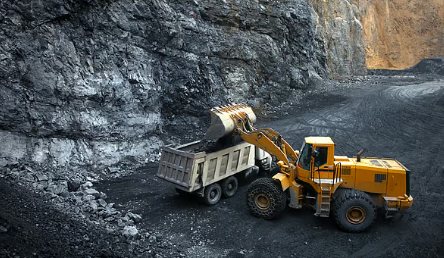
Mining is fundamentally a non-sustainable activity in the commonsensical sense because it extracts finite resources that do not grow back. The environmental footprint is significant, often resulting in:
- Pollution: Contamination of air, water, and soil during extraction.
- Landscape Alteration: Permanent changes to the Earth’s surface.
- Biodiversity Loss: Destruction of pristine ecosystems and rainforests that no amount of technology can fully restore.
II. The Concept of “Weak Sustainability”
To reconcile the need for minerals with environmental goals, organizations like the UN and the International Energy Agency (IEA) have introduced the idea of weak sustainability.
- Core Argument: Mining is considered sustainable if the value created from the extracted resources (e.g., human capital through education and infrastructure) outlasts the lifespan of the mine itself.
- Inescapability: Proponents argue that since green technologies require these minerals, mining is an inescapable necessity for a low-carbon future.
III. “Responsible Mining” Frameworks
Industries are increasingly adopting “responsible mining” practices to mitigate their immediate impact. Key pillars include:
- Green Powering: Using green hydrogen, solar, or wind power to run mining equipment and trucks.
- Community Engagement: Seeking explicit permission from local communities to operate.
- Profit Sharing: Ensuring that a portion of the mining revenue is shared directly with the local inhabitants.
IV. The Recycling Bottleneck
A major hurdle to achieving a circular mineral economy is the current recycling rate.
- Current Rate: For many critical minerals, the global recycling rate is currently at best only 5%.
- Future Goal: To reduce reliance on fresh mining, minerals must be recycled almost indefinitely once they have been extracted and used in products.
2. Major Mineral Production by Country
| Mineral | Top Producer | Other Major Producers |
| Iron Ore | Australia | Brazil, China, India |
| Gold | China | Australia, Russia, Canada |
| Aluminum | China | India, Russia, Canada |
| Silver | Mexico | China, Peru, Chile |
| Nickel | Indonesia | Philippines, Russia, New Caledonia |
| Coal | China | India, Indonesia, USA |
3. Mineral-Wise Leading States
| Mineral | Leading State | Notable Regions/Mines |
| Iron Ore | Odisha | Mayurbhanj, Keonjhar (Joda-Barbil belt) |
| Coal | Chhattisgarh / Odisha | Korba (CG), Talcher (Odisha), Jharia (JH) |
| Bauxite (Aluminum) | Odisha | Kalahandi, Koraput (Panchpatmali) |
| Manganese | Madhya Pradesh | Balaghat (Bharveli mine) |
| Copper | Madhya Pradesh | Malanjkhand (Largest open-cast copper mine) |
| Chromite | Odisha | Sukinda Valley (Produces ~95% of India’s supply) |
| Limestone | Rajasthan | Chittorgarh, Jodhpur |
| Gold | Karnataka | Kolar Gold Fields (KGF), Hutti Mines |
With reference to critical minerals, consider the following statements:
1. They are renewable resources that can be replenished naturally.
2. They are essential for technologies like electric batteries and solar panels.
3. Their extraction has no significant environmental impact.
Which of the statements given above are correct?
(a) 2 only
(b) 1 and 2 only
(c) 2 and 3 only
(d) 1, 2 and 3
Answer: A
Explanation:
•  1. They are renewable resources that can be replenished naturally (Incorrect): Critical minerals such as lithium, cobalt, and copper are finite, non-renewable resources. Once extracted from the ground, they do not grow back. To maintain a steady supply without constant new mining, these materials must be recycled almost indefinitely.
•  2. They are essential for technologies like electric batteries and solar panels (Correct): The transition to a low-carbon future is heavily dependent on these minerals. Wind turbines, solar panels, and electric batteries all require specific elements like lithium, cobalt, and rare-earth elements to function efficiently.
•  3. Their extraction has no significant environmental impact (Incorrect): Mining for critical minerals is far from impact-free. The process often pollutes the environment, destroys biodiversity, and permanently changes landscapes. Even with technologies designed to reduce footprints, mining remains an extractive process that cannot restore pristine ecosystems like rainforests once they are destroyed.